Forecasting the Future: How Vedic Astrology Decodes Global Politics
Predicting political shifts and global leadership changes has always been a complex challenge. Traditional polling and data analytics often fail to capture the underlying timing of major world events, leaving a gap for alternative, time-tested methodologies. As the world becomes more volatile, there is a growing need for tools that can provide clarity and foresight into the cycles of power.
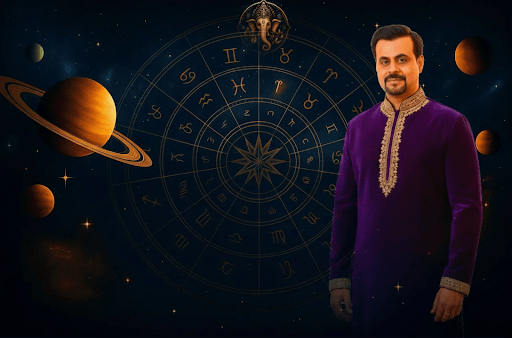
Mohnish Suri, the founder of AstralAstrologer.com, uses the ancient science of Vedic astrology to solve this problem. By analyzing planetary cycles and traditional principles, he provides documented forecasts that offer a neutral, timing-based perspective on global affairs. In this interview, we explore his unique approach to political forecasting and the intersection of ancient wisdom with modern research.
Q: You have gained significant attention for your documented political forecasts. Can you explain the core principles of Vedic astrology that allow you to identify these global trends months in advance?
Mohnish Suri:
Vedic astrology studies the connection between planetary cycles and events on Earth. When we analyze geopolitics, we mainly focus on the movements of slow planets like Saturn, Jupiter, Rahu, and Ketu, because they often signal large global shifts.
We also closely observe solar and lunar eclipses, which historically coincide with major turning points such as political tensions, conflicts, or leadership changes. In addition, in vedic astrology the Nakshatras (lunar constellations) help us understand the psychological and strategic behavior of nations and leaders.
Astrology does not claim to control events. It simply helps us identify periods of higher probability when certain types of events are more likely to unfold. By studying these cosmic planetary cycles together, we can sometimes recognize global trends months before they appear in the news.
Q: Your analysis of the U.S. election cycle and specific periods of risk for political figures was remarkably precise. How do you maintain a neutral, educational stance when dealing with such highly polarized topics?
Mohnish Suri:
My approach is always to remain neutral and focus on the astrological cycles, not on political opinions or personal views. Vedic Astrology is simply a tool for studying patterns in time.
When I analyze events like the U.S. election cycle or risks around political leaders, I look only at planetary transits, eclipses, and timing indicators. These cycles apply to everyone, regardless of political party or ideology.
I also try to present my analysis in an educational way, explaining the planetary patterns so people can understand the reasoning behind the forecast. My intention is not to support or criticize any leader, but to share insights about the cosmic timing that may influence global events.
In that sense, astrology becomes more like studying cycles of nature. The focus remains on understanding the timing of events rather than taking sides in political debates.
Q: Beyond individual leaders, you have also looked at rising political figures like Tulsi Gabbard and Mark Carney. What specific astrological indicators do you look for when determining if a person has a “leadership window”?
Mohnish Suri:
In Vedic astrology, a “leadership window” usually appears when certain planetary periods and transits activate power-related areas in a person’s birth chart.
First, I look at the Dasha (planetary time periods). If someone enters the period of strong planets like the Sun, Jupiter, or Saturn, it often brings visibility, authority, and public recognition.
Second, I study major transits, especially of Jupiter and Saturn. When these planets activate the 10th house of career, leadership, or public status, it can indicate a time when a person rises into an important role.
Third, I examine Rahu’s influence, because Rahu often brings sudden rise, media attention, and unconventional breakthroughs in politics.
When several of these factors align together—favorable Dasha, supportive transits, and strong planetary placements—it creates what I call a “leadership window,” a period when a person is more likely to step into a larger public role.
Q: You are known for merging Vedic astrology with modern technology, including AI-driven tools and financial analytics. How does the integration of AI change or enhance the way you interpret traditional planetary cycles?
Mohnish Suri:
AI helps bring speed, scale, and data analysis to traditional astrology. The principles of Vedic astrology remain the same, but AI allows us to study planetary cycles across very large historical datasets.
For example, AI can analyze thousands of past planetary alignments and compare them with historical events, financial market movements, or geopolitical developments. This helps identify repeating patterns that may not be obvious when studying charts manually.
Technology also allows us to combine astrology with modern financial analytics, such as market data, volatility cycles, and macroeconomic indicators. When both systems point to similar timing windows, the insight becomes stronger.
In simple terms, AI does not replace astrology—it enhances our ability to observe patterns and test historical correlations. It allows ancient knowledge to be studied in a more structured and data-driven way.
Q: For those who are skeptical of astrology in the realm of politics and finance, how do you use your timestamped YouTube videos and public documentation to build transparency and trust?
Mohnish Suri:
Skepticism is natural, and I believe transparency is the best way to address it. That is why I publish my analysis publicly and in advance through timestamped YouTube videos and written articles.
Once a video is uploaded, the date and time are permanently recorded. This creates a clear public record of what was predicted and when it was said. Anyone can go back and verify the timeline.
I also encourage people to review both accurate and inaccurate forecasts, because astrology, like any analytical discipline, is about probabilities and cycles. The goal is not perfection, but honest documentation of the process.
By keeping everything public and time-stamped, it allows viewers and researchers to evaluate the work objectively and build trust over time.
Q: What are the most significant planetary transits or cycles currently unfolding that you believe will shape the global political landscape over the next year?
Mohnish Suri:
Several important planetary cycles are unfolding right now that could influence the global political landscape over the next year.
First, Saturn’s influence remains very significant. Saturn represents governments, institutions, and systems of authority. When Saturn forms strong alignments or changes position, we often see pressure on political structures, policy shifts, or leadership challenges.
Second, the Rahu–Ketu axis is very important in geopolitics. These nodes often create unexpected events, sudden escalations, or strategic power shifts between nations. Their transits tend to bring periods of uncertainty and global realignment.
Third, we are seeing strong eclipse cycles, which historically coincide with turning points in world affairs. Eclipses often activate sensitive political timelines, bringing hidden tensions to the surface.
When these factors operate together—Saturn’s structural pressure, Rahu-Ketu’s unpredictability, and eclipse triggers—we usually enter a period where geopolitical events move faster and the global order goes through noticeable changes.
The insights shared by Mohnish Suri highlight the potential of Vedic astrology as a sophisticated timing tool for understanding global events. By focusing on planetary cycles rather than political ideology, his work provides a unique lens through which we can view the rise and fall of leadership. The success of his documented forecasts suggests that ancient methodologies still hold significant relevance in our data-driven age.
As we move forward, the intersection of traditional wisdom and modern technology like AI will likely redefine how we anticipate future trends. Understanding these cycles is no longer just a matter of tradition but a practical approach to navigating an uncertain world. Mohnish Suri and AstralAstrologer.com remain at the forefront of this evolution, offering a roadmap for those seeking to understand the timing of the future.
To learn more, visit www.AstralAstrologer.com