How to Experience Rome Without Turning It Into a Checklist
Rome is one of those cities that can easily overwhelm you. There are layers of history on almost every street, famous landmarks around every corner, and endless recommendations online telling you what you “must” see. It is tempting to try to fit everything into one intense schedule. But the truth is that Rome works best when you slow down.
Instead of rushing from monument to monument, think in terms of rhythm. A relaxed morning, a long lunch, a slow afternoon walk, and an unhurried evening. That is when the city starts to feel alive rather than exhausting.
Of course, there are classics you should not miss. The Colosseum is impressive even from the outside, especially if you walk around it rather than just snapping a quick photo. The Roman Forum lets you imagine the scale of ancient Rome if you give it a bit of time and space. The Pantheon, simple and perfectly proportioned, feels surprisingly modern despite being nearly two thousand years old.
The key is not to dedicate half your day to each landmark, but to combine them naturally with the neighborhoods around them. For a balanced route that mixes iconic sights with quieter corners, this guide to the best things to do in Rome offers a practical structure that keeps distances realistic and leaves room for wandering.
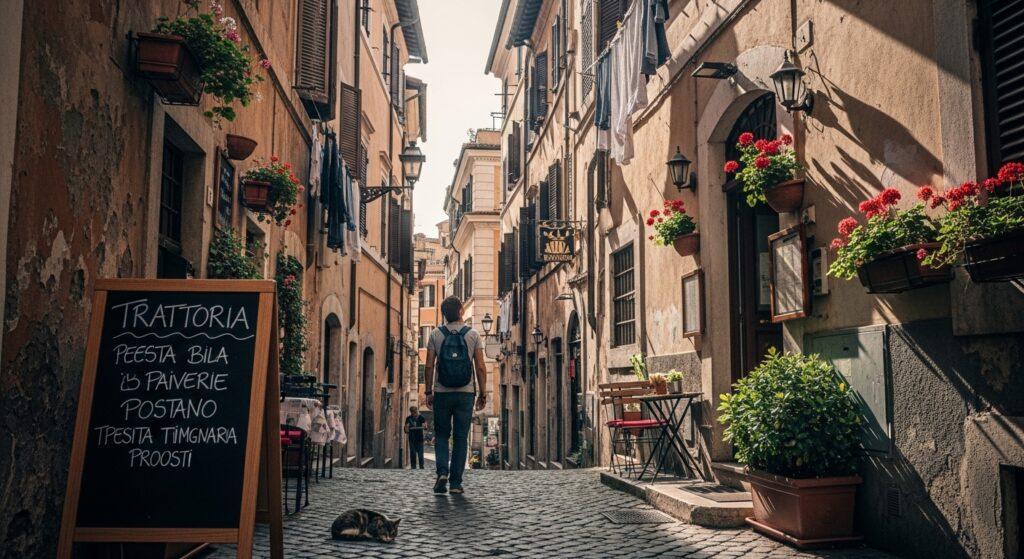
Walking is essential in Rome. The city reveals itself slowly. Start in Trastevere and let yourself get lost in narrow streets lined with ivy and small trattorias. Cross the Tiber at sunset and notice how the light transforms the buildings. Move from the Pantheon to Piazza Navona without checking your phone every five minutes. Stop for coffee when you feel like it.
One mistake many visitors make is overplanning their meals. Rome does not require a spreadsheet of reservations. An espresso at a standing bar in the morning, a simple pasta dish in a neighborhood restaurant, and gelato in a quiet square are often more memorable than the most hyped dining spots. Food fits into the flow of the day rather than interrupting it.
If you only have a short time in the city, simplify even more. Choose one neighborhood and explore it deeply. Sit on the Spanish Steps and observe the city instead of moving immediately to the next attraction. Walk through Campo de’ Fiori and notice daily life unfolding around you. Rome rewards attention, not speed.
Planning tools can help if you want structure without rigidity. Platforms like Funizy are designed for travelers who want curated ideas but still prefer flexibility. Instead of following a strict schedule, you can shape your day around interests, pace, and mood. That approach works particularly well in cities like Rome, where atmosphere matters as much as landmarks.
Rome adapts to different types of travelers. It works for first time visitors who want to see the essentials. It works for couples looking for evening walks and quiet piazzas. It works for families who need space and manageable routes. And it works for solo travelers who simply want to wander and observe.
The real secret is to accept that you will not see everything. And that is perfectly fine. Rome is not a city to conquer. It is a city to experience. When you reduce pressure and focus on meaningful moments instead of ticking boxes, the experience becomes lighter and more memorable.
Slow down. Walk more. Leave space for small discoveries. That is how Rome stays with you long after you leave.