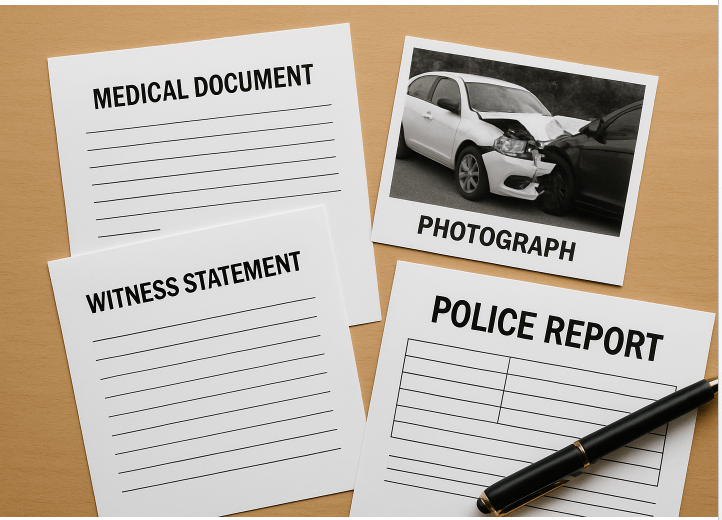
The Role of Evidence in Winning a Personal Injury Claim
Key Takeaways
- Strong evidence is essential for proving liability and securing compensation in personal injury cases.
- Medical records and bills document injuries and financial impact.
- Photographs and videos capture the scene and damage objectively.
- Witness and expert testimonies add credibility and technical insight.
- Official reports provide unbiased accounts from authorities or professionals.
- Financial and employment records demonstrate economic losses.
- Well-documented evidence strengthens negotiations, settlement offers, and court outcomes.
Introduction
When pursuing a personal injury claim, the success of your case hinges not just on the facts but on how effectively those facts are proven. The strength of your claim depends on the quality and quantity of evidence presented to insurance companies, judges, or juries. Evidence is essential for establishing liability, documenting injuries, and securing adequate compensation from the responsible party. From the moment an accident occurs, collecting the right evidence can be the most critical factor in achieving a favorable outcome. Often, working with an experienced injury lawyer who understands the importance of comprehensive documentation is invaluable in navigating the claims process.
Personal injury law relies heavily on proof. Whether your injuries stem from a car accident, slip and fall, or workplace incident, the evidence you gather will shape the trajectory of your case. Without strong evidence, you may struggle to establish fault, document damages, and receive the financial support needed for medical care and recovery. Understanding what types of proof are most valuable and how to assemble them can make all the difference in the outcome of your legal journey.
Types of Evidence in Personal Injury Cases
Medical Records and Bills
Medical records are at the heart of every personal injury claim, serving as the foundational proof needed to link your injuries to the incident. These documents detail the medical care you received, diagnoses, tests, prescribed treatments, and expected prognosis. In addition to demonstrating the severity of your injuries, medical bills can be used to quantify your financial losses and serve as justification for your compensation demand. Accurate and organized medical documentation makes it significantly easier to show the cause, severity, and projected impact of your injuries, which is crucial to obtaining a fair settlement or favorable verdict.
Photographic and Video Evidence
Visual proof, including photographs and videos, captures the facts of an incident objectively. This evidence can include images of the accident scene, your visible injuries, vehicle or property damage, unsafe conditions, and anything else relevant to the case. High-quality, time-stamped photos or video footage can prevent disputes about how injuries occurred and who was at fault. In today’s world, where smartphones are often at hand, prompt documentation after an accident can provide powerful, unfiltered evidence that persuades insurance adjusters and jurors alike.
Witness Testimonies
Eyewitnesses help paint a clearer picture of how the injury occurred. Their testimonies can support your version of events, clarify disputed facts, and offer perspectives you may not be able to provide yourself. Collecting contact information from witnesses at the scene is vital, as memories can fade and key details may be forgotten if not recorded promptly. Statements from neutral third parties, such as passersby or store employees, tend to carry significant weight in determining liability and credibility.
Expert Testimonies
Certain personal injury cases benefit from expert analysis. Medical professionals can elaborate on your injuries, the cause, necessary future treatment, and prognosis. Accident reconstruction specialists help explain how a crash or incident likely unfolded based on available physical clues. Financial professionals may calculate future lost earnings or the long-term economic burden resulting from your injuries. Their authoritative opinions often give your case a level of technical detail that can withstand intense scrutiny.
Official Reports
Official records, such as police reports, workplace incident logs, or property maintenance records, provide an independent, objective account of the events. These documents often include critical information such as fault determinations, witness statements, and on-scene observations by first responders or other professionals. Insurance companies and courts rely on these records as unbiased sources of fact when assessing your claim.
Financial and Employment Records
Injuries often bring financial hardship, not only through medical bills but also lost income, changes in your ability to work, or other out-of-pocket expenses. Detailed records showing missed work, wage statements, invoices for rehabilitation, and receipts for medication or transportation ensure your economic losses are fully documented. This evidence allows you to claim both current and anticipated future damages linked to your injury.
Importance of Evidence in Personal Injury Claims
Proving Negligence
To succeed in a personal injury lawsuit, it is essential to demonstrate that the responsible party acted negligently or recklessly. Collecting proof that shows how the other party caused the accident, for example, by running a red light, creating a hazardous condition, or failing to maintain a property, is fundamental to your claim. Without solid evidence, establishing legal liability becomes considerably more difficult, putting your case in jeopardy.
Demonstrating the Extent of Injuries
Insurers and courts need clear, objective proof of your injuries and how they have affected your daily life. Medical records, photographs, and expert statements combine to illustrate both the immediate and long-term impacts of your injuries. Well-documented evidence ensures that the seriousness of your condition cannot be easily disputed, which helps you obtain compensation for both economic and non-economic damages.
Strengthening Negotiations and Settlement Offers
Insurance companies carefully evaluate each claim before making a settlement offer. A case supported by organized, compelling evidence carries much more weight during negotiations. When presented with indisputable proof, insurers are often more willing to settle rather than risk losing in court. This leverage can mean the difference between a lowball offer and the full value your case deserves.
Final Thoughts
The outcome of your personal injury claim hinges on your ability to provide strong, credible evidence for every aspect of your case. Every piece of proof, from meticulously maintained medical records to supportive witness statements and official reports, strengthens your argument and increases your chances of winning. The more thorough your documentation, the more difficult it becomes for an opposing party to deny fault or dispute the value of your damages. Taking a diligent, evidence-based approach is crucial for achieving justice, recovering losses, and moving forward after an injury.