Benefits of Stackable Batteries for Flexible Energy Storage Solutions
As global energy consumption rises and renewable energy adoption accelerates, flexible storage systems have become essential. Homes are using more electricity than ever due to electric vehicles, smart appliances, and home offices, while businesses require reliable backup systems to prevent costly downtime. In this evolving energy landscape, stackable batteries have emerged as one of the most practical and future-ready solutions for scalable energy storage.
Unlike traditional battery systems with fixed capacity, modular battery designs allow users to increase storage gradually. This flexibility makes them ideal for residential solar installations, commercial backup systems, and off-grid applications. In this article, we will explore the benefits of stackable batteries, how they work, and why they are reshaping modern energy storage solutions.
What Are Stackable Batteries?
Stackable batteries are modular energy storage units that can be connected physically and electrically to increase total storage capacity. Each unit functions independently, but when connected, they operate as a single system. This modularity allows users to scale storage as needed, without replacing the entire system.
Most modern systems use lithium-ion or lithium iron phosphate (LiFePO4) cells, which are known for long cycle life and safe operation. Each module includes an integrated Battery Management System (BMS) that monitors voltage, temperature, and charge cycles to ensure optimal performance.
Because of their modular nature, stackable home batteries have become increasingly popular among homeowners installing solar panels or upgrading their backup power systems.
How Stackable Battery Systems Work
Stackable battery systems are built around modular engineering. Each module has a fixed energy capacity, typically measured in kilowatt-hours (kWh). When modules are connected, their capacities combine to form a larger energy storage solution.
For instance, a single module may store 5 kWh of electricity. Adding a second module doubles the total storage to 10 kWh. This linear expansion allows users to tailor their energy system to real-time demand rather than estimated future usage.
The Battery Management System ensures all modules charge and discharge evenly, preventing imbalances and extending battery lifespan. Because each module communicates with a central controller, performance remains consistent regardless of the number of units connected.
This flexibility is why stackable battery systems are ideal for both residential and commercial energy storage applications.
Why Flexible Energy Storage Is Becoming Essential
Energy consumption patterns are increasingly dynamic. Electric vehicle charging, smart home appliances, and variable solar generation all increase demand unpredictably. Traditional fixed-capacity batteries require users to estimate their long-term energy needs, often resulting in systems that are either oversized or undersized.
Flexible energy storage allows homeowners and businesses to adapt their systems over time. By starting small and adding modules as needed, users save money, optimize energy usage, and reduce waste. For example, studies show that modular energy storage can improve solar self-consumption by up to 30%, reducing reliance on the grid.
In commercial settings, stackable battery systems allow companies to scale backup power in tandem with operational growth, avoiding costly over-investment.
Key Benefits of Stackable Batteries
● Scalability for Growing Energy Needs
Energy requirements evolve. Families may add electric vehicles, install more appliances, or increase solar panel capacity. With stackable battery systems, additional modules can be added without replacing the original system, ensuring energy storage grows alongside demand.
● Lower Initial Investment
Stackable battery systems let users start with a smaller setup, reducing upfront costs. As energy consumption grows, additional modules can be purchased, spreading the investment over time. This makes renewable energy storage more accessible to homeowners and small businesses.
● Space Efficiency and Clean Installation
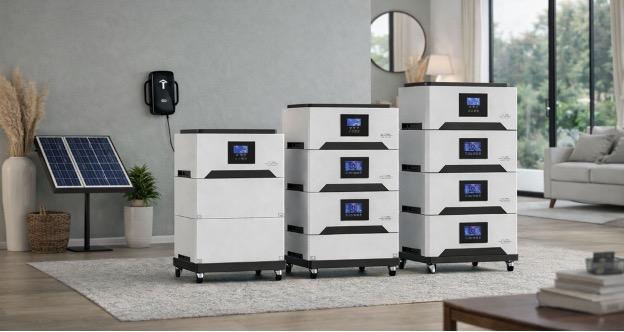
Stackable batteries are compact, often designed for vertical stacking. This reduces floor space requirements and results in cleaner installations compared to traditional battery banks, which can be bulky and require complex racks.
● Improved Safety and Reliability
Lithium iron phosphate (LiFePO4) technology, widely used in modern stackable batteries, offers high thermal stability and longer cycle life. Coupled with integrated BMS systems, stackable batteries maintain safe operation under heavy use. If one module experiences an issue, it can often be replaced without affecting the entire system, increasing reliability.
● Simplified Maintenance
Because each module is self-contained, maintenance is easier and less disruptive. Individual units can be replaced or upgraded without dismantling the full system, lowering long-term operating costs.
Stackable Batteries vs Traditional Battery Systems
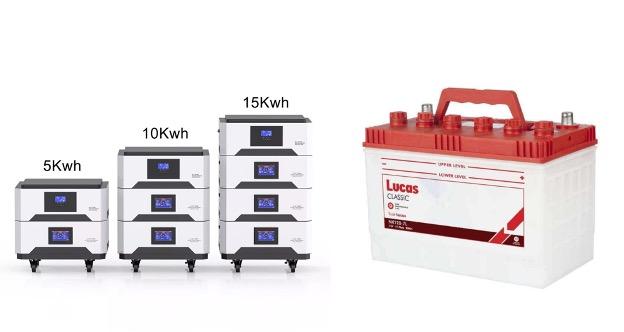
Traditional fixed-capacity batteries often occupy more space, require complex installation, and force users to overestimate their future energy needs. If additional capacity is required, upgrading can be costly and inefficient.
In contrast, stackable battery systems are modular, scalable, and adaptable. Users can expand their system gradually, reducing waste and aligning storage with actual energy needs. The flexibility also enables incremental integration of renewable energy sources such as solar and wind.
Research indicates that modular energy storage can reduce lifecycle costs by up to 20% compared to fixed systems, making stackable batteries not just technically superior but also more cost-effective.
Applications of Stackable Battery Systems
Residential Solar Energy Storage: Stackable home batteries store solar power generated during the day for nighttime use. Homeowners can start with one or two modules and expand as solar generation or household energy demand increases.
Backup Power During Outages: Grid instability and extreme weather events make backup power critical. Stackable batteries provide reliable emergency energy without the noise, maintenance, or emissions of traditional generators.
Commercial and Industrial Use: Businesses can scale backup and peak-shaving systems in line with operational growth, avoiding overbuilt infrastructure.
Off-Grid and Remote Applications: Stackable batteries are ideal for cabins, farms, and rural communities. They allow incremental expansion as electricity demand grows, providing a practical solution for remote energy independence.
Long-Term Financial and Environmental Advantages
Stackable battery systems often deliver superior long-term value. Their modular design reduces unnecessary upfront costs and simplifies future upgrades. With high-quality lithium-based chemistry, these batteries can deliver 5,000–6,000 full charge cycles, significantly outlasting traditional systems.
Environmentally, stackable batteries enable higher solar self-consumption, lower grid dependence, and lower carbon emissions. Additionally, only individual modules require replacement over time, reducing electronic waste compared with replacing large battery banks in a single operation.
Providers like Avepower are leading the market in offering safe, efficient, and scalable modular battery solutions for both homes and businesses.
Final Thoughts
Stackable batteries offer far more than just expandable capacity—they provide scalability, enhanced safety, lower upfront costs, space efficiency, and long-term savings. Perfect for residential solar systems, commercial backup solutions, or off-grid applications, these modular energy storage units adapt as your electricity needs grow.
By starting small and adding modules over time, homeowners and businesses can optimize energy use, reduce reliance on the grid, and maximize the benefits of renewable energy. With long-lasting lithium-based technology and simplified maintenance, stackable batteries are a flexible, future-proof solution. Invest in modular energy storage today to secure reliable, efficient power for years to come.
Frequently Asked Questions About Stackable Batteries
1. Are stackable batteries safe for home use?
Yes. Most stackable home batteries use LiFePO4 technology, which is highly thermally stable. Integrated Battery Management Systems further ensure safe operation.
2. How long do stackable battery modules last?
High-quality modules typically last 10–15 years, with 5,000–6,000 full charge cycles depending on usage patterns.
3. Can I expand my stackable battery system later?
Absolutely. This is the main advantage. You can add modules at any time to increase storage capacity without replacing your existing system.
4. Are stackable batteries suitable for solar power storage?
Yes. They are ideal for storing solar energy, enabling homeowners to maximize self-consumption and reduce electricity bills.
5. How do stackable batteries compare to traditional battery banks?
Stackable batteries are more flexible, scalable, and space-efficient. They also enable incremental investment and simpler maintenance than fixed-capacity systems.