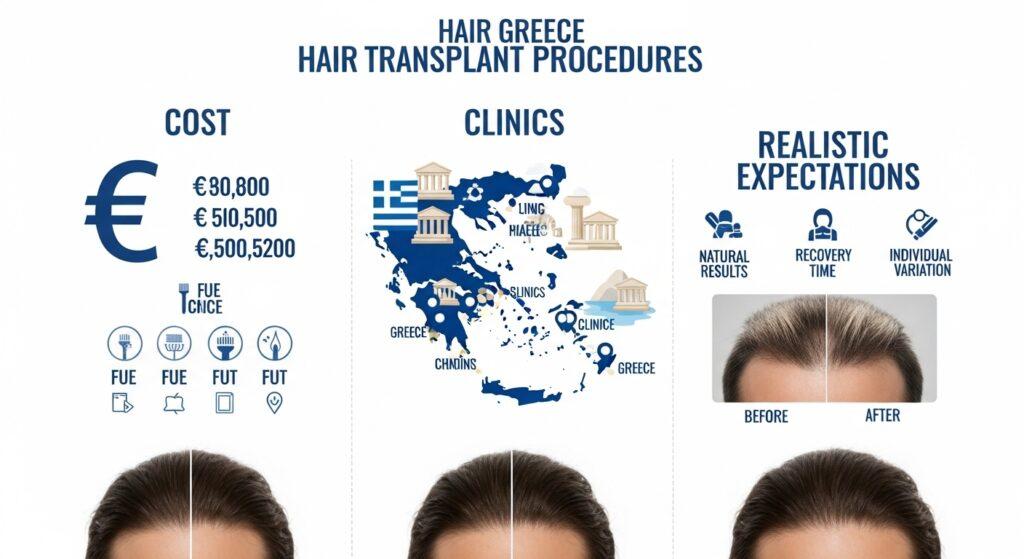
Hair Transplant in Greece: Cost, Clinics, and Realistic Expectations
Hair loss affects millions of men and women worldwide. As treatment prices vary significantly between countries, many patients now consider a hair transplant in Greece as a balanced option between affordability and European medical standards.
For individuals traveling from the UK, Europe, or the Middle East, Greece offers convenient access, experienced clinics, and a structured healthcare environment. However, successful results depend on careful planning, surgeon expertise, and realistic expectations — not just location.
Why Patients Choose Greece
Greece has steadily gained attention in the hair restoration field. Cities such as:
- Athens
- Thessaloniki
- Heraklion
attract international patients seeking quality treatment in a European setting.
Common reasons patients choose Greece include:
- Competitive pricing compared to Western Europe
- High medical standards within the EU framework
- Experienced surgical teams
- Modern clinic facilities
- Comfortable recovery environment
While cost savings are important, surgeon involvement and long-term hair loss planning remain the most critical factors in achieving natural outcomes.
Cost of Hair Transplant in Greece
Hair transplant procedures in Greece are typically more affordable than in countries like the UK, Germany, or France, while maintaining European regulatory standards.
Price differences often reflect:
- Lower operating costs
- Competitive private healthcare market
- Currency advantages for international patients
Some clinics offer structured treatment packages that may include:
- Consultation and scalp analysis
- Procedure and anesthesia
- Post-operative medications
- Follow-up support
Patients should confirm whether the surgeon personally performs the graft extraction and implantation rather than delegating key stages entirely to technicians.
Techniques Used in Greece
Modern clinics in Greece generally use advanced hair restoration methods such as:
FUE (Follicular Unit Extraction)
Individual grafts are harvested and implanted to create natural density and minimal scarring.
DHI (Direct Hair Implantation)
A refined implantation technique allowing precise control over angle and depth.
Natural-looking results depend on:
- Conservative hairline placement
- Age-appropriate density planning
- Proper graft direction
- Long-term donor area management
Older “plug” methods are no longer considered standard practice in reputable clinics.
Recovery Timeline
The healing process after a hair transplant in Greece follows universal biological stages:
Days 1–3: Mild redness and swelling
Weeks 2–4: Temporary shedding phase
Months 3–4: Early regrowth begins
Month 6: Noticeable density improvement
Months 9–12: Final maturation and thickening
Most international patients stay in Greece for two to three days before returning home. Full results require patience, as gradual improvement over several months is normal.
Risks and Considerations
Complications are typically related to poor surgical planning rather than geography.
Common issues in poorly planned cases include:
- Hairlines positioned too low
- Overharvesting of the donor area
- Unnatural, dense frontal packing
- Failure to account for future hair loss progression
Selecting a clinic based solely on the lowest price significantly increases these risks.
Thorough consultation, realistic graft allocation, and long-term strategy greatly improve the likelihood of natural, sustainable results.
Choosing the Right Clinic in Greece
When researching the best hair transplant in Greece, patients should:
- Review consistent before-and-after results
- Confirm surgeon credentials and experience
- Ask about long-term hair loss management
- Avoid unrealistic marketing promises
- Request a personalized treatment plan
Professional clinics prioritize conservative design and donor preservation rather than aggressive density claims.
Is Hair Transplant in Greece Worth It?
A hair transplant in Greece can be an excellent option for patients seeking European medical standards with competitive pricing. When performed by experienced surgeons using modern techniques, results can appear natural, age-appropriate, and long-lasting.
Ultimately, the success of a hair transplant depends on surgical design, donor management, and long-term planning — not simply the country itself.
Careful research and realistic expectations remain the foundation of a successful outcome.