All About the Unsent Project
The Digital Sanctuary Where Unspoken Words Find a Home
The unsent project is a digital archive where people anonymously submit messages they wrote but never sent, pairing each message with a color that represents their emotion. Founded by artist Rora Blue in 2015, the platform has grown to over 5 million submissions, creating a unique intersection of art, emotional expression, and shared human experience.
Quick Overview of The Unsent Project:
- What it is: An anonymous platform for sharing messages you never sent to someone
- How it works: Submit a message with a recipient’s first name, choose one of 11 colors representing your emotion, and it’s archived publicly after manual review
- Why people use it: To find emotional release, closure, and connection through expressing unspoken words
- Who uses it: Primarily Gen Z, with submissions spanning love, regret, gratitude, and pain
- Key feature: Complete anonymity with no account needed, but messages become permanent once approved
- Size: Over 5 million messages archived since 2015, with a 300% surge during the COVID-19 pandemic
When digital perfection dominates our feeds, the unsent project offers something different—a space for the messy, unfinished emotional business we all carry. These are the words typed and deleted, the apologies that stayed silent, the confessions that lived only in journals.
Research shows that expressive writing provides measurable mental health benefits, reducing depression symptoms significantly. The platform taps into this therapeutic power while changing individual silence into collective art. Each submission becomes part of a growing mix of human vulnerability, searchable by name or color, where strangers find unexpected connection through shared feelings.
What began as a simple Tumblr experiment has evolved into a cultural phenomenon, particularly among Gen Z—a generation that simultaneously craves authenticity and anonymity online. The project’s growth mirrors broader digital expression patterns, with physical isolation during the pandemic driving people toward virtual emotional outlets.
Glossary for unsent project:
What is The Unsent Project and How Does It Work?
At its core, the unsent project is a unique digital archive dedicated to preserving and sharing the words we wished we had said. It’s a collection of anonymous messages, ranging from declarations of love to heartfelt apologies and profound regrets, all submitted by individuals who, for various reasons, never sent them to their intended recipients. We see it as a powerful testament to the human experience, giving voice to the unspoken.
The project began as a simple Tumblr experiment in 2015 by artist Rora Blue. Her vision was to create a space where emotionally reserved individuals could express their feelings through color and text, changing their silence into a shared, tangible form of art. From these humble beginnings, it has blossomed into a vast digital sanctuary, now housing over 5 million anonymous messages.
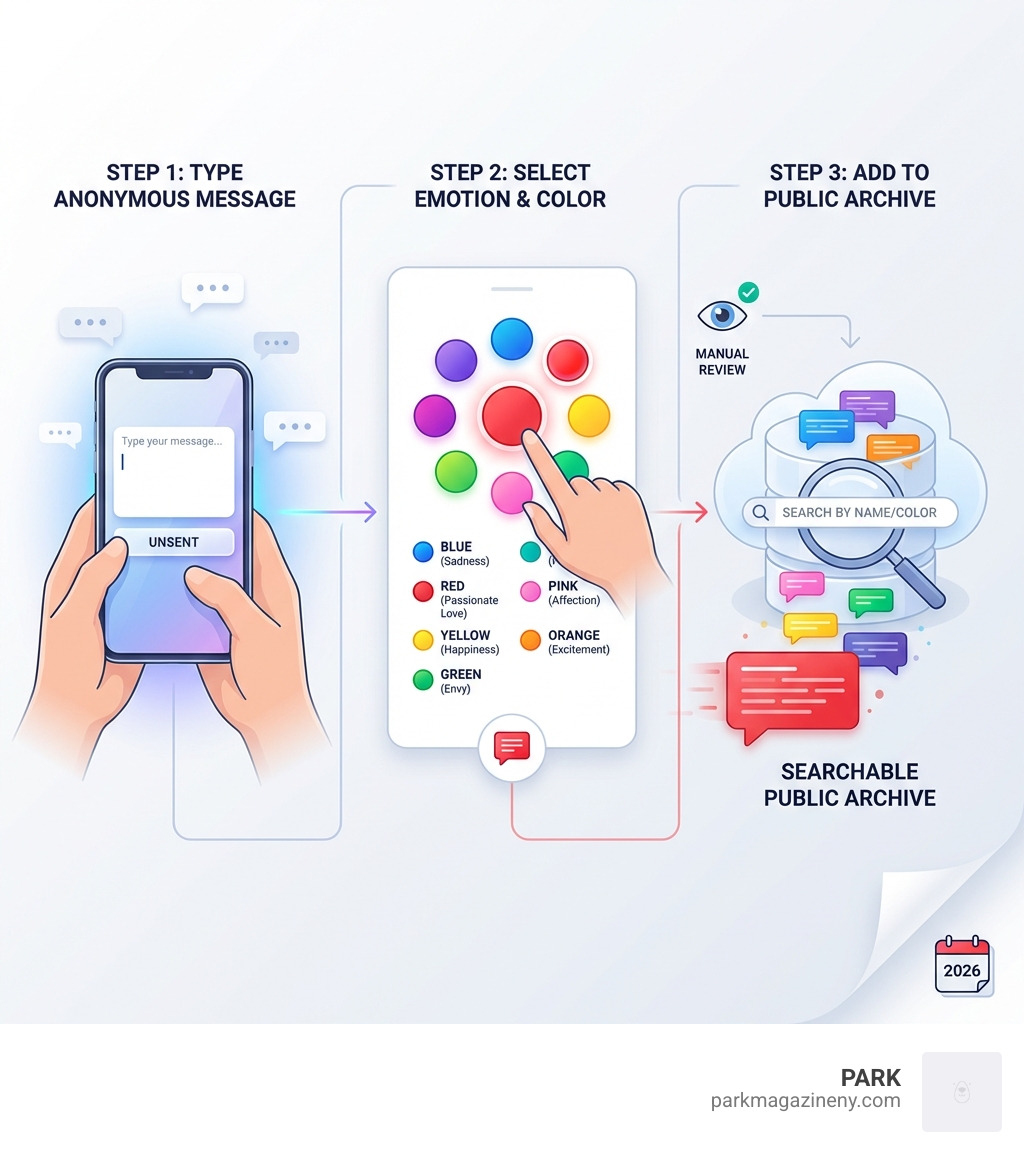
The brilliance of the unsent project lies in its simplicity and profound impact. Users are invited to submit their unsent messages, often addressing a specific person by their first name (e.g., “to Brooklyn”), and then choose a color that best represents the emotion attached to that message. These submissions are then manually reviewed by the founder to ensure guideline adherence before being added to the public archive. This archive is completely anonymous, allowing anyone to search for messages, perhaps even finding one addressed to them or reflecting their own unspoken feelings. It’s a digital space where empathy and connection flourish through shared vulnerability.
The Submission-to-Display Process
The journey of an unsent message from a private thought to a public display is straightforward and designed for maximum ease and anonymity.
First, users access an anonymous submission form on the official website. There’s absolutely no need to sign up or create an account, which is a key aspect of its appeal, particularly for those seeking complete privacy. We understand that sharing such raw emotions requires a safe and judgment-free environment.
Next, after crafting their message—which can be a few words or a longer reflection—the user selects one of 11 distinct colors. Each color is linked to a specific emotional state, offering a non-verbal layer of expression to the text. This is where the project truly becomes a blend of art and psychology.
Once submitted, the message doesn’t immediately appear in the archive. Instead, it undergoes a manual review process. The founder personally reviews between 50 and 100 submissions daily. This crucial step ensures that all messages adhere to the project’s guidelines, maintaining the integrity and safety of the archive. This manual approval became mandatory in 2023 after the platform received numerous guideline violations, highlighting the project’s commitment to creating a respectful space.
Finally, upon approval, the message is added to the public archive. Once a message receives approval, it becomes a permanent part of the collection; there is no deletion option, and messages cannot be retracted. This permanence underscores the weight and significance of each submission. The archive is fully searchable by keyword, color, or even specific names, allowing individuals to explore the vast mix of human emotions. For instance, you could search for messages to a specific name, like searching for messages to “brooklyn” in the archive.
The Founder’s Vision
Rora Blue, the artist behind the unsent project, envisioned more than just a website. She saw it as a powerful tool for catharsis and connection. Her goal was to provide an outlet for emotionally reserved people—those of us who struggle to articulate our deepest feelings directly—to express themselves without fear. By allowing messages to be paired with colors, she created a unique language for emotions, bridging the gap between internal experience and external expression.
We believe that the project’s true genius lies in its ability to take something inherently private—an unspoken thought or feeling—and transform it into a public, yet anonymous, work of art. This process changes silence into a shared human experience, fostering a sense of collective understanding and empathy. It’s a space where we can all see reflections of our own emotional journeys in the words of strangers.
The Psychology of Unspoken Words: Colors and Catharsis

There’s a profound psychological power in expressing what remains unsaid, and the unsent project taps directly into this. The act of writing down our deepest thoughts and feelings, even if never sent to an individual, is a form of expressive writing, a practice widely recognized for its mental health benefits. It offers us a unique avenue for emotional release and catharsis.
Many of us carry around emotional baggage—words we wish we’d spoken, apologies we never made, affections we never declared. These unspoken narratives can weigh heavily on our minds. The unsent project provides a safe, anonymous space to unload these burdens. For countless users, it offers a sense of closure, validation that their feelings are real and shared, and a deep connection to others who have steerd similar emotional landscapes. It’s a quiet testament to the idea that even if “what we call the beginning is often the end,” as T.S. Eliot wisely noted, sometimes, in ending a chapter, we can begin anew through expression. You can explore this sentiment further through T.S. Eliot’s profound quotes.
The Meaning Behind the Colors
One of the most distinctive and impactful features of the unsent project is its unique color system. Instead of simply submitting plain text, users are invited to choose one of 11 distinct colors, each designed to represent a specific emotional state. This color-coding system adds an immediate visual and emotional layer to each message, helping us to categorize and understand the underlying feelings at a glance.
Here’s a look at the emotional categorization behind the 11 colors:
- Red: Often associated with passionate love, but also frequently used for gratitude mixed with pain. It’s the second most popular color.
- Blue: The most requested color, typically representing sadness, longing, or calmness.
- Black: Signifies deep despair, grief, or profound emptiness.
- Pink: Expresses unappreciated effort, one-sided love, or tender affection.
- Yellow: Represents hope, peacefulness, happiness, or sometimes caution.
- Purple: Evokes imagination, nostalgia, spirituality, or mystery.
- White: Symbolizes silent acceptance, purity, new beginnings, or a blank slate.
- Orange: Reflects energy, enthusiasm, confusion, or a mix of emotions.
- Brown: Associated with shame, guilt, earthiness, or grounding.
- Grey: Represents memories, uncertainty, neutrality, or a sense of being stuck.
- (Note: The eleventh color isn’t explicitly detailed in the research, but the system uses 11 in total, implying a broad spectrum of human emotion).
We find it fascinating how these colors allow for a nuanced expression that words alone might sometimes miss. It’s a powerful way to convey the underlying emotional tone of an unsent message.
The Therapeutic Power of the unsent project
The therapeutic benefits of expressive writing are well-documented. A meta-analysis across over 400 studies has shown measurable health outcomes from engaging in expressive writing. The unsent project offers a compelling example of how a digital platform can facilitate this kind of healing.
For individuals struggling with difficult emotions, expressing them anonymously can be incredibly liberating. Research published in 2025 demonstrated significant effects of positive expressive writing, reducing depression symptoms with a Cohen’s d of -0.45. Similarly, it showed a reduction in social anxiety symptoms. While the unsent project isn’t a direct therapeutic intervention, it provides a safe, accessible space for this type of emotional processing. Users often find that simply writing down their feelings, selecting a color, and submitting it, even if never sent to the intended person, can bring a profound sense of relief and calm. It allows for the acknowledgement of emotions that might otherwise remain suppressed, fostering a path towards personal healing and emotional well-being.
A Digital Phenomenon: Growth, Demographics, and Impact
The journey of the unsent project from a small Tumblr experiment to a massive digital archive is nothing short of remarkable. It has become a significant digital phenomenon, especially among younger generations, demonstrating the profound need for anonymous emotional outlets in our increasingly connected world.
We’ve witnessed its statistical growth explode, changing it into a platform housing over 5 million anonymous messages. This exponential increase wasn’t just organic; it was significantly impacted by global events and social media trends, particularly during the COVID-19 pandemic. The project’s evolution truly reflects broader patterns of digital expression and our collective search for connection and catharsis.
From Tumblr to 5 Million Messages
What started with a modest 100 submissions in 2015 quickly gained traction. By 2020, the archive had expanded to approximately 1.25 million messages, a testament to the universal appeal of its core concept. However, the most dramatic surge occurred during the COVID-19 pandemic. In 2021, submissions increased by a staggering 300% compared to pre-pandemic levels, pushing the total past the 5 million mark.
This surge wasn’t a coincidence. As physical isolation became the norm, many of us, including the founders, observed a heightened reliance on virtual emotional outlets. The unsent project offered a perfect refuge—a place where people could process their feelings, express their anxieties, and share their unspoken words without the pressure of direct confrontation or judgment. It became a vital digital space for navigating the emotional complexities of a global crisis.
The Voice of a Generation
The unsent project has found its primary user base in Gen Z, a generation that steers the digital landscape with both fierce authenticity and a deep appreciation for anonymity. Research indicates that 66% of Gen Z respondents report social media impacts their mental health, and over 60% received medical diagnoses for anxiety during the COVID-19 period. This demographic, which spends significant time on social platforms (53% spend four or more hours daily), also shows a preference for content that does not remain online permanently (55%). Yet, they accept the permanent, anonymous archive of the unsent project.
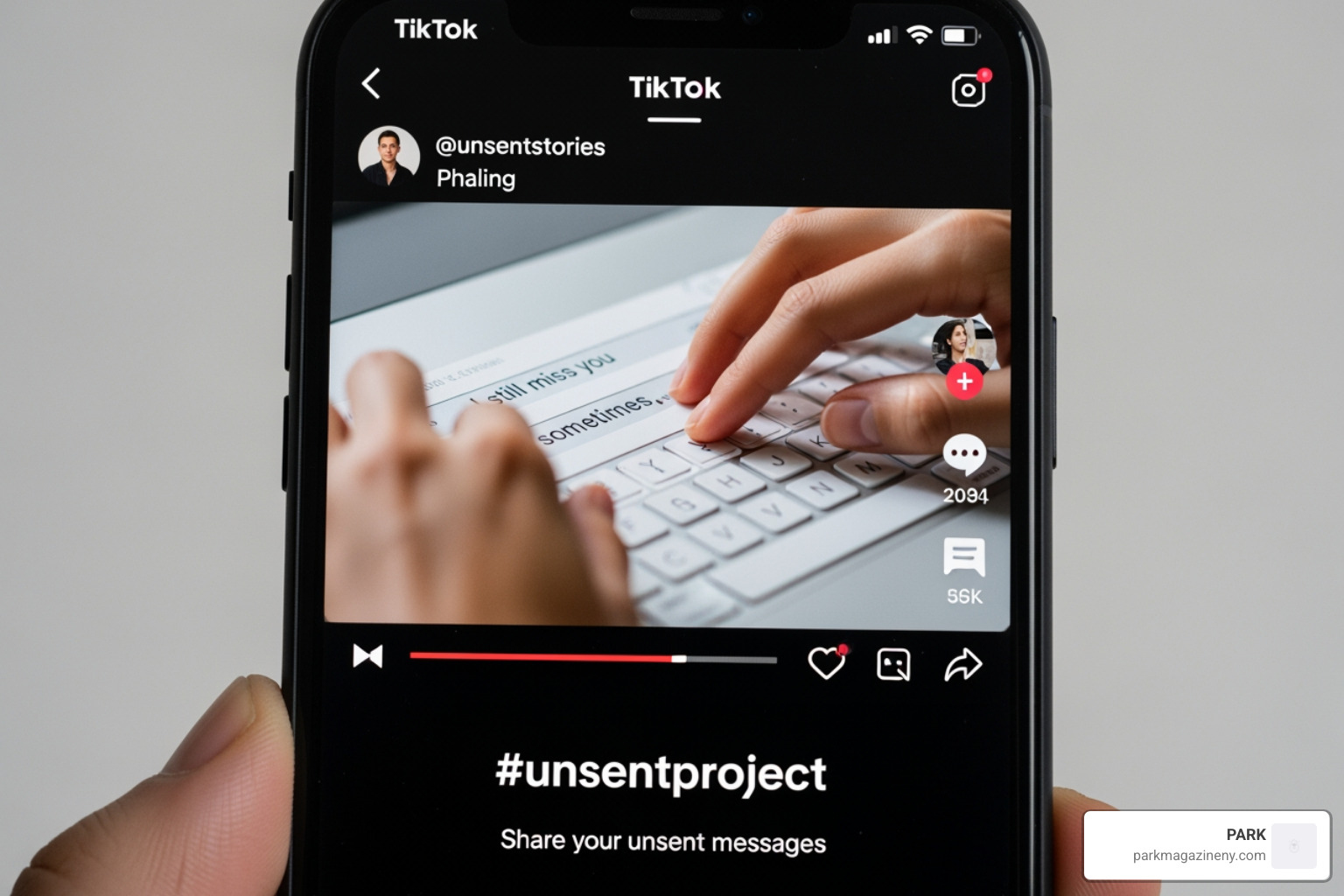
We’ve seen how TikTok, in particular, has amplified the project’s reach among Gen Z. Videos showing users searching their own names or the names of others in the archive generate periodic traffic surges. This viral trend highlights a unique aspect of Gen Z’s digital behavior: a desire to connect with raw, unfiltered emotion, even if it means sifting through the unspoken words of strangers. It’s a fascinating blend of voyeurism and empathy, driven by the search for shared experience and validation in a world that often feels isolating.
Frequently Asked Questions about The Unsent Project
We often hear common questions about the unsent project, and we’re here to provide clear answers based on our understanding and the project’s guidelines.
Is the Unsent Project truly anonymous and safe?
Yes, the unsent project prioritizes anonymity as a core feature. From our perspective, this is one of its greatest strengths. Users do not need to sign up or create an account, meaning no personal data is collected that could link a message back to an individual. This complete lack of personal identification is crucial for encouraging raw and honest expression.
However, it’s important to understand that while your identity is anonymous, the submitted messages themselves become public. Once approved and added to the archive, they are visible to anyone browsing the site. Therefore, we strongly advise users against including any private or personal details within their messages that could inadvertently identify themselves or others. The content permanence policy means that once a message is approved, it cannot be deleted or retracted. So, write from the heart, but always with discretion.
What kind of messages are typically submitted?
The beauty of the unsent project lies in the vast spectrum of human emotion it captures. We see a rich mix of messages, but some common themes emerge consistently:
- Love and Heartbreak: Many messages are declarations of love that were never spoken, or expressions of profound heartbreak and longing for past relationships.
- Regret and Apologies: Users often submit apologies for past wrongs, or express deep regret over actions taken or words left unsaid.
- Gratitude: Some messages convey heartfelt gratitude to individuals who impacted their lives, even if that appreciation was never directly communicated.
- Unfinished Business: A significant portion of submissions deals with “unfinished business”—thoughts, feelings, or questions that linger after a relationship or event has concluded.
- Raw and Honest Emotions: Regardless of the specific theme, the messages are overwhelmingly raw, honest, and deeply emotional. They are slices of life, filled with memory, pain, hope, and vulnerability.
These messages offer an intimate glimpse into the inner worlds of millions, creating a collective narrative of our shared human experience.
What are the future goals for the project?
The unsent project is far from static; it’s an evolving platform with exciting future goals and expansion plans. We anticipate that it will continue to grow and adapt, reaching even more people and changing in innovative ways.
By the end of 2025, the project aims to launch a dedicated mobile app, which will undoubtedly make it even more accessible for users to submit messages and explore the archive on the go. This move reflects the increasing demand for mobile-first experiences. Furthermore, there are plans to develop interactive features, potentially allowing for anonymous responses to archived messages, which could deepen the sense of community and connection within the platform.
Perhaps most exciting for us, with our focus on the new york art scene, is the project’s ambition to transcend the digital field. A physical gallery is slated to open in 2026, where selected submissions will be transformed into a living art installation. This will allow the project to be featured in art exhibitions and literary festivals, bringing the raw emotion of the digital archive into tangible, immersive experiences. Additionally, the project is actively seeking partnerships with leading mental health organizations to provide resources and support, further solidifying its role beyond just an artistic endeavor.
Conclusion: The Future of Unspoken Stories
The unsent project stands as a powerful testament to the human need for expression and connection. It’s a remarkable digital sanctuary where unspoken words find a voice, changing individual silence into a profound collective narrative. We’ve seen how this unique platform, born from a simple Tumblr experiment, has evolved into a global phenomenon, driven by the raw honesty of over 5 million anonymous messages. It beautifully intersects art and technology, serving as a mirror to our deepest emotions—love, regret, gratitude, and pain.
As it continues to grow, with plans for a mobile app, interactive features, and a physical gallery in 2026, the unsent project is ready to become an even more significant cultural force. We, at PARK Ave Magazine LLC, are particularly excited by its potential to become a tangible art form, perhaps even influencing the vibrant New York art scene. It reminds us that every unspoken word carries weight, and sometimes, the most powerful expressions are those never sent.
We invite you to explore the rich mix of human emotion within this unique archive. For more insights into the intersection of art, culture, and human experience, we encourage you to explore more on art and culture on our platform.