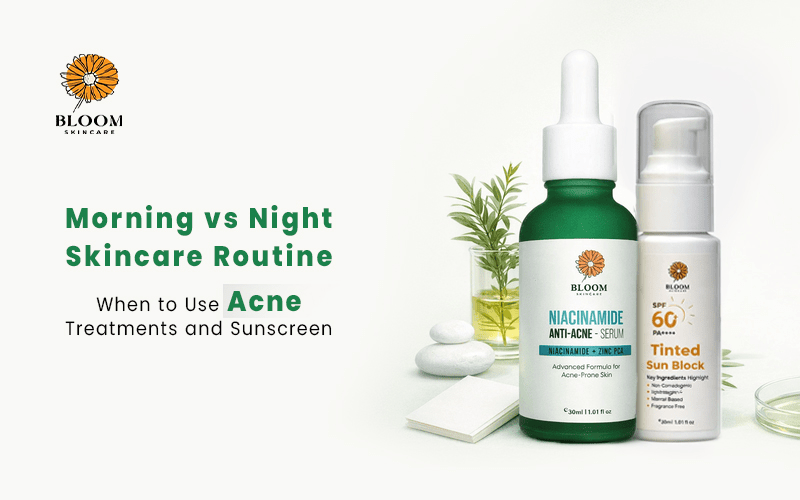
Morning vs Night Skincare Routine: When to Use Acne Treatments and Sunscreen
You can use the best acne products in the world and still break out if your timing is wrong. Most people unknowingly sabotage their results by using powerful acne treatments at the wrong time or skipping sunscreen when their skin needs it most. Your skin behaves very differently in the morning than it does at night.
Understanding this timing can be the difference between fighting acne and finally getting ahead of it. In this article, we’ll break down exactly how your morning and night skincare routines should differ, common skin issues that worsen acne, and why sunscreen is non-negotiable if you want clear, healthy skin.
Why Your Morning and Night Skincare Routines Should Be Different
Your skin works differently during the day and at night. In the morning, its main job is protection. During the day, it produces more oil, the pores are more active, and the skin has to protect itself against the harsh environmental factors like sun, pollution, dirt, and bacteria.
At night, the skin gets into the repair mode. It has increased cell turnover, and the damage caused during the day can be fixed easily. The ingredients can penetrate more deeply and precisely because there is no sun or environmental stress. Therefore, daytime skincare emphasizes lightweight hydration and protection, while nighttime skincare supports repair and renewal.
Applying the same products at the wrong time can actually worsen the acne. Heavy creams or potent actives in the morning can cause pore clogging or even the formation of irritation and breakouts. However, skipping cleansing or using only light products at night can leave dirt and oil on the skin, which will hinder proper repair and increase the likelihood of acne.
What to Use in the Morning If You Have Acne
If you have acne, your morning skincare routine should focus on keeping skin clean, calm, and protected. Using the right products helps control oil, prevent breakouts, and protect your skin from things that can make acne worse during the day. To help you out, we have gathered some pro tips you can consider for morning skincare:
Gentle Cleanser
To start off, apply a gentle, non-striping cleanser that will cleanse your face by taking away the extra oil and bacteria. Strong cleansers can lead to increased oil production and skin irritation, which in turn can worsen the situation by causing more acne.
Lightweight Acne Treatment
If your skin can bear it, you may use a gentle acne product that contains either salicylic acid or niacinamide as the morning step. These ingredients will not only help keep the pores unblocked but also reduce the inflammation and control the secretion of oil without creating a burden on the skin in the morning.
Oil-Free Moisturizer
Moisture is still a necessity for acne-prone skin. A light, non-comedogenic moisturizer should be used to maintain the skin’s moisture balance. If you avoid using moisturizer, the skin may react by increasing its oil production, which will subsequently make acne worse.
Why Sunscreen Is Essential in Your Morning Skincare Routine
Sunscreen is a must-have in your morning regimen if you’re facing acne issues. The sun hurts your skin and makes it more delicate during the day under the UV rays. It can worsen inflammation, trigger more oil production, and make the acne marks and dark spots last longer. Moreover, many anti-acne drugs make your skin more prone to sunburn; it’s important to use sunscreen to prevent skin problems.
A morning application of a light, non-comedogenic tinted sun block gives your skin time to recover and prevents future breakouts. Sun protection is only needed during the day, as UV exposure occurs in daylight. This is why sunscreen belongs in your morning routine, not your nighttime routine, making it one of the key differences between morning and night skincare.
A Nighttime Skincare Routine for Skin Repair and Acne Treatment
At night, your skin focuses on healing and renewing itself, making this the best time to use acne treatments and repair-focused ingredients. A proper nighttime routine helps clear breakouts, reduce marks, and strengthen the skin barrier while you sleep.
Cleanser
First, apply a gentle cleanser to remove dirt, sweat, sunscreen, cosmetics, and environmental toxins. A clean face that is free from impurities ensures that the treatments applied will be more effective without clogged pores.
Targeted Acne Treatment
Nighttime is perfect for stronger ingredients that fight acne, as there is no sun exposure. Ingredients like salicylic acid (clears pores), benzoyl peroxide (kills bacteria that cause acne), or retinoids (prevent clogged pores and boost cell turnover) work better when applied at night.
Soothing And Repair Serum
Calm the skin with the help of Niacinamide serum, including other ingredients like centella asiatica, and hyaluronic acid. For calming the skin, these ingredients help reduce redness, strengthen the skin barrier, and prevent the skin from drying or becoming irritated.
Moisturizer
As a final step, apply a moisturizer that does not clog pores to seal in moisture and aid skin healing. Nighttime moisturizing nourishes your skin with the necessary vitamins and minerals, keeping it hydrated and moisturized.
Common Skincare Mistakes That Make Acne Worse
No matter how well you’re keeping up with the skincare, acne can still come back and haunt you. To steer clear of it, let’s have a look at some common mistakes that we should need to avoid:
Using Acne Treatments at the Wrong Time
It might make your skin more sensitive to the sun if you put on heavy acne treatments in the morning, and this could lead to irritation, redness, and even worse breakouts. Usually, nighttime is the right time to apply strong actives like retinoids or benzoyl peroxide.
Skipping Sunscreen While Using Actives
The ingredients that cure acne can also make your skin more vulnerable to the harmful effects of UV rays. Dark spots, inflamed skin, and prolonged healing of acne scars may result from not using sunscreen while getting these treatments.
Over-Exfoliating
Exfoliation to the extreme can bring down your skin’s protective layer and oil overproduction, leading to worse acne. Instead of vigorous scrubbing, use mild chemical exfoliants a few times a week.
Mixing Incompatible Ingredients
Combining certain ingredients like retinoids with strong acids or pairing up benzoyl peroxide with vitamin C can irritate the skin, lessen the effectiveness of the treatment, and even cause more acne. It is very important to apply the products correctly and follow the prescribed routines.
Final Thoughts
In conclusion, both morning and evening skincare rituals are equally important when it comes to dealing with acne. Daytime skincare concentrates on the application of light moisturizers and protection of skin, whereas nighttime skincare takes over with repair and renewal. A high-quality sunscreen is, however, a key factor of any skincare regime and must not be neglected under any circumstances. If you’re looking for a reliable skincare brand to fulfill your skincare goals, then you can surely explore Bloom Skincare. They offer natural, dermatologist-recommended products that are healthy and beneficial for your skin objectives.