Balos Lagoon by Catamaran A Mediterranean Perspective on Crete’s Most Iconic Shoreline
Balos Lagoon as a Living Landscape
Balos Lagoon is one of those places where photography only captures half the story. From above, the lagoon appears as a serene wash of turquoise and pale sand, but from the sea the landscape becomes dynamic. Tides push water across the sandbar, turning the lagoon into a constantly shifting canvas. Color gradients move between jade, mint and cobalt as sediment, light and depth interact. The cliffs of the Gramvousa peninsula rise behind it like a natural amphitheater, giving the lagoon a scale that surprises even well-traveled visitors.
Arriving by land compresses the narrative into a single viewpoint. Approaching by sea expands it into cinematic chapters. First open water, then shallows, then sandbanks, then cliffs. Those layers unfold at a speed dictated by wind and current rather than by road access. It creates a sense of discovery that feels more aligned with the lagoon’s wild character. Traveling by catamaran turns Balos from a destination into an experience, allowing the environment to introduce itself at its own tempo.
The Catamaran as a Moving Observation Deck
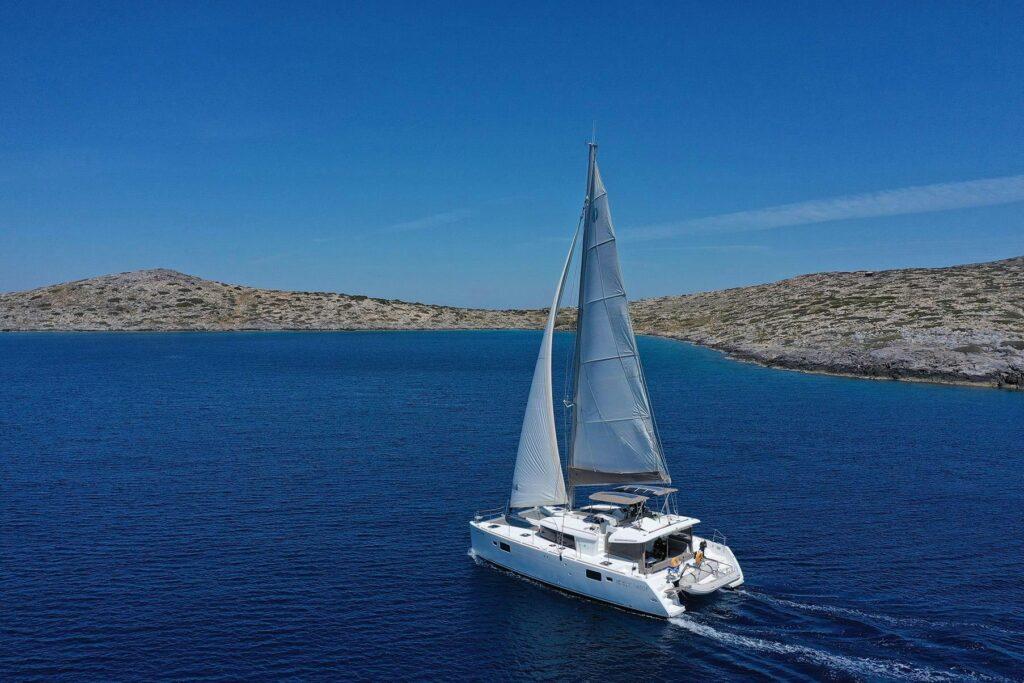
A catamaran functions differently than a typical tour vessel. Its dual-hull geometry reduces pitch and roll, offering a more stable platform for travelers who prefer comfort during maritime journeys. The wide deck space keeps everyone above the waterline instead of inside enclosed cabins, preserving the sensory connection with the Mediterranean. The sea is not background noise but part of the experience: salt-laced wind, shifting surface textures and slow changes in light as the day progresses.
This vessel type also encourages slow travel. There is time to observe limestone formations, shallow reefs and seabirds tracing the coastline. The shallow draft enables closer approaches to luminous swimming areas near the lagoon. For many travelers, the cruise becomes a highlight independent of the lagoon. This is why the phrase “ crete catamaran ” increasingly appears in travel circles as shorthand for maritime experiences in Crete that balance comfort, geography and cultural context rather than pure luxury or speed.
A Coastal Route Rich in Narrative
The voyage typically begins near Chania, where the old Venetian harbor hints at centuries of maritime exchange. Once the catamaran clears the breakwater, the urban soundscape dissolves and the coastline takes priority. Limestone cliffs, exposed strata and isolated coves emerge in sequence. The absence of heavy development along this stretch of coast gives travelers a sense of wilderness unusual for a region with a strong tourism economy.
Closer to the lagoon, the sea reveals its layered palette. Shallow continental shelves create the luminous turquoise tones associated with Balos, while deeper trenches produce darker cobalt bands. Sunlight refracts across the sandy bottom, generating reflective highlights that make the lagoon look almost phosphorescent. The cruise reframes Crete as a geological story rather than a collection of beaches.
Ecology Beneath the Surface Layer
The lagoon’s colors are not just aesthetic but biological. Shallow zones support Posidonia oceanica meadows, seagrass ecosystems crucial for oxygenation and marine biodiversity in the eastern Mediterranean. Schools of small fish inhabit the meadows, moving in synchronized bursts that echo the choreography of birds above the cliffs. Deeper sections connect to reef structures that house invertebrates and slow-growing coral species adapted to the region’s temperature and salinity levels.
These ecological conditions shape visitor experience even without direct interpretation. Swimming in the lagoon feels different precisely because of the combination of seagrass, sediment and changing depth. It creates visual gradients when sunlight hits the water at midday, contributing to the Balos Lagoon signature palette that travelers often associate with edited photography, only to discover that the real scene is equally saturated.
Cultural Continuity on the Water
Crete’s relationship with the sea predates modern tourism by millennia. Maritime routes enabled trade, defense and cultural exchange across the ancient Aegean. That heritage persists through local captains, maritime suppliers and small family operations tied to Chania and the peninsula. Unlike resort-sculpted nautical tourism, the maritime culture here is not staged. The sea is part of daily life, part of the island’s vocabulary.
This grounded perspective explains why the expression “ crete catamaran cruises ” has begun to represent not just a boat trip but a type of maritime travel rooted in the island’s identity. It bridges comfort and continuity without drifting into artificial luxury or theatrical reenactment. The cruise format aligns naturally with Crete’s geography, history and climate rather than being imposed upon them.
A Glimpse Toward the Future
The rising interest in catamaran-based lagoon travel suggests a shift in Mediterranean tourism priorities. Travelers are no longer seeking the fastest way to reach a landmark but the most meaningful way to approach it. Curated itineraries highlighting photography, ecology, snorkeling or sunset light have emerged without turning the experience into a rigid package product. The sea remains the central character, not a backdrop.
Environmental considerations also shape the future. Operators increasingly adjust anchoring practices to protect seagrass meadows, manage waste responsibly and educate guests on marine ecosystems. Balos does not need embellishment; it needs stewardship. Preserving its wild character ensures that the lagoon continues to reward travelers with landscapes defined by geology, biology and time rather than by ornamentation.
Crete Catamaran is a maritime company based in Chania, specializing in curated catamaran experiences across the northwest coastline of the island. The company focuses on Balos Lagoon, the Gramvousa peninsula and neighboring routes that highlight Crete’s distinctive Mediterranean geography. Its approach combines spacious vessels, experienced local captains and sailing routes that emphasize scenery and culture rather than speed or mass tourism. Through these itineraries, Crete Catamaran has contributed to the growing interest in lagoon-based maritime travel and reinforced the role of catamaran cruising as one of the most rewarding ways to explore the island’s coastline.