How Hotels Reduce Costs with Professional Waste Consulting
The hospitality industry operates on tight margins, rising labor costs, fluctuating occupancy rates, and increasing pressure to meet sustainability expectations. One area that is often overlooked but has a major impact on profitability is waste. From food scraps and packaging to recyclables and operational debris, hotels generate enormous volumes of waste every day. When managed inefficiently, that waste quietly drains revenue. This is where professional waste consulting becomes a strategic advantage. By partnering with a hotel waste management consultant, hotels can uncover hidden savings, streamline operations, and build a more sustainable business model without sacrificing guest experience.
The True Cost of Poor Waste Management
Waste is not just a disposal problem. It is a cost multiplier. Hotels pay for hauling, landfill tipping fees, recycling contamination penalties, labor hours, and lost opportunities to recover value from materials. Many properties are locked into outdated service contracts with haulers that no longer match their actual waste volumes or seasonal fluctuations. Overfilled dumpsters, unnecessary pickups, and contamination of recyclables all drive costs higher. Without a structured waste strategy, these inefficiencies compound over time, often unnoticed in broader operating budgets.
What Professional Waste Consulting Actually Does
A hotel waste management consultant takes a data driven approach to understanding how waste flows through a property. This begins with a comprehensive waste audit that evaluates what materials are being discarded, where they originate, and how frequently they are removed. Consultants analyze hauling invoices, container sizes, pickup schedules, and contamination rates. They also observe staff practices in kitchens, housekeeping, maintenance, and front-of-house areas. The goal is to identify inefficiencies and opportunities for cost reduction that internal teams often do not have the time or expertise to uncover.
Optimizing Hauling Contracts and Service Levels
One of the fastest ways hotels reduce costs through waste consulting is by renegotiating hauling contracts. Many properties pay for services they do not need, such as daily pickups for containers that are only half full. A consultant uses audit data to right size dumpsters, compactors, and recycling bins, aligning service frequency with actual demand. In some cases, reducing pickups by even one day per week can save thousands of dollars annually. Consultants also benchmark pricing against regional market rates to ensure hotels are not overpaying for basic waste services.
Reducing Food Waste in Hotel Kitchens
Food waste is one of the largest and most expensive waste streams in hotels, especially those with restaurants, banquet facilities, and room service. Professional waste consulting helps hotels identify where food waste occurs, whether during prep, overproduction, spoilage, or plate waste. Consultants then recommend operational changes such as better inventory tracking, adjusted portion sizes, improved forecasting for events, and staff training. Some hotels implement composting or food donation programs that reduce landfill costs while supporting sustainability goals. Cutting food waste not only lowers disposal expenses but also reduces food purchasing costs, creating a double financial benefit.
Improving Recycling and Reducing Contamination
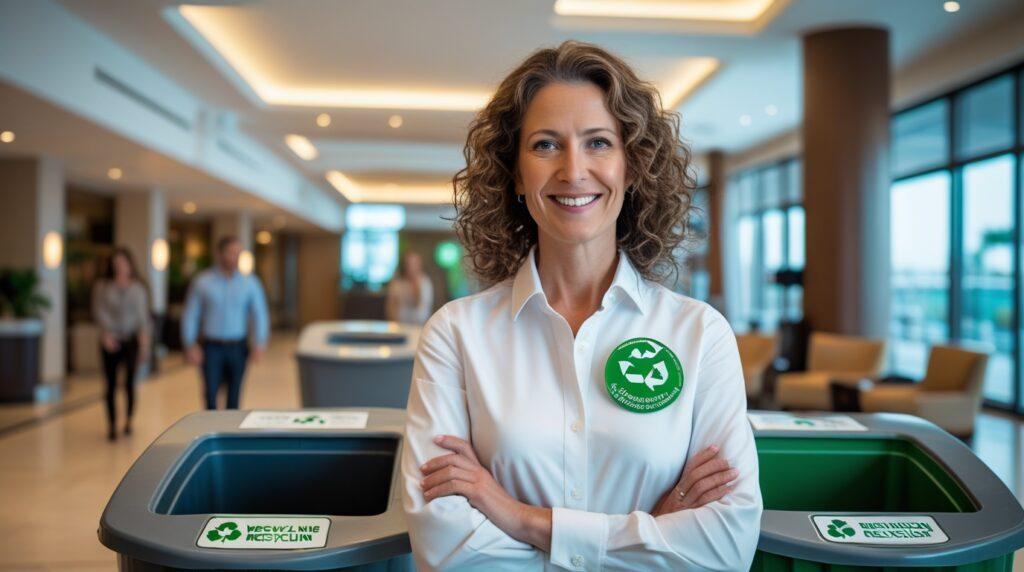
Recycling programs often fail to deliver savings because of contamination. When non-recyclable materials are mixed into recycling streams, haulers may reject loads or charge contamination fees. A hotel waste management consultant evaluates recycling signage, bin placement, and staff training to ensure materials are sorted correctly. Simple changes such as standardized color-coded bins, clearer labels, and back of house education can significantly improve recycling efficiency. Higher diversion rates reduce landfill volume and can lower overall waste hauling costs while supporting environmental initiatives that resonate with guests.
Streamlining Labor and Operational Efficiency
Waste handling takes time, and time costs money. Housekeeping staff, kitchen teams, and maintenance crews all spend hours moving waste between bins, storage areas, and dumpsters. Consultants assess these workflows to reduce unnecessary handling. By consolidating waste stations, adjusting bin placement, and introducing compactors or balers where appropriate, hotels can reduce labor hours dedicated to waste tasks. These time savings allow staff to focus on guest service and core responsibilities, improving both efficiency and morale.
Leveraging Data for Long Term Cost Control
Professional waste consulting is not a one-time fix. Consultants provide ongoing data tracking and performance metrics that help hotels maintain savings over time. Regular reviews of waste volumes, diversion rates, and hauling costs ensure that improvements stick even as occupancy levels change. This data driven approach allows hotel management to make informed decisions, forecast costs more accurately, and quickly address inefficiencies before they become expensive problems.
Supporting Sustainability Without Greenwashing
Modern travelers increasingly value sustainability, but hotels must balance environmental goals with financial realities. A hotel waste management consultant helps properties implement practical sustainability initiatives that deliver real cost savings, not just marketing claims. Waste reduction, recycling optimization, and composting programs all lower expenses while reducing environmental impact. These efforts can be communicated transparently to guests, enhancing brand reputation without exaggeration or risk.
Adapting to Local Regulations and Compliance
Waste regulations vary widely by city and state, with increasing requirements for recycling, composting, and landfill diversion. Noncompliance can result in fines and reputational damage. Waste consultants stay informed about local regulations and help hotels adapt their programs accordingly. By proactively aligning operations with regulatory requirements, hotels avoid penalties and costly last-minute changes. Compliance driven efficiency often leads to lower overall waste costs as well.
Financial Impact Across Single and Multi-Property Portfolios
For hotel groups and management companies, the savings from professional waste consulting scale quickly. Standardizing waste practices across multiple properties creates consistency, improves negotiating power with haulers, and simplifies training. Consultants develop repeatable frameworks that can be rolled out portfolio wide, delivering measurable cost reductions at each location. Over time, these savings can represent a significant boost to net operating income.
Why Hotels Are Turning to Waste Consulting Now
Rising operational costs and increased sustainability expectations make waste management a strategic priority rather than a background task. Hotels that rely on outdated waste practices risk paying more than necessary while falling behind competitors who operate more efficiently. A hotel waste management consultant brings specialized expertise, objective analysis, and proven strategies that internal teams often lack the bandwidth to implement. The result is lower costs, smoother operations, and a stronger sustainability profile.
Conclusion
Professional waste consulting offers hotels a clear path to cost reduction without compromising service quality. By auditing waste streams, optimizing hauling contracts, reducing food waste, improving recycling, and streamlining labor, consultants uncover savings that directly impact the bottom line. In an industry where small efficiencies add up quickly, waste management is no longer just about disposal. It is about strategy. Hotels that invest in expert guidance position themselves to operate leaner, greener, and more profitably for years to come.