Beyond the Canvas: Exploring the Heart of New York’s Art Scene
Why the New York Art Scene Remains the World’s Creative Capital
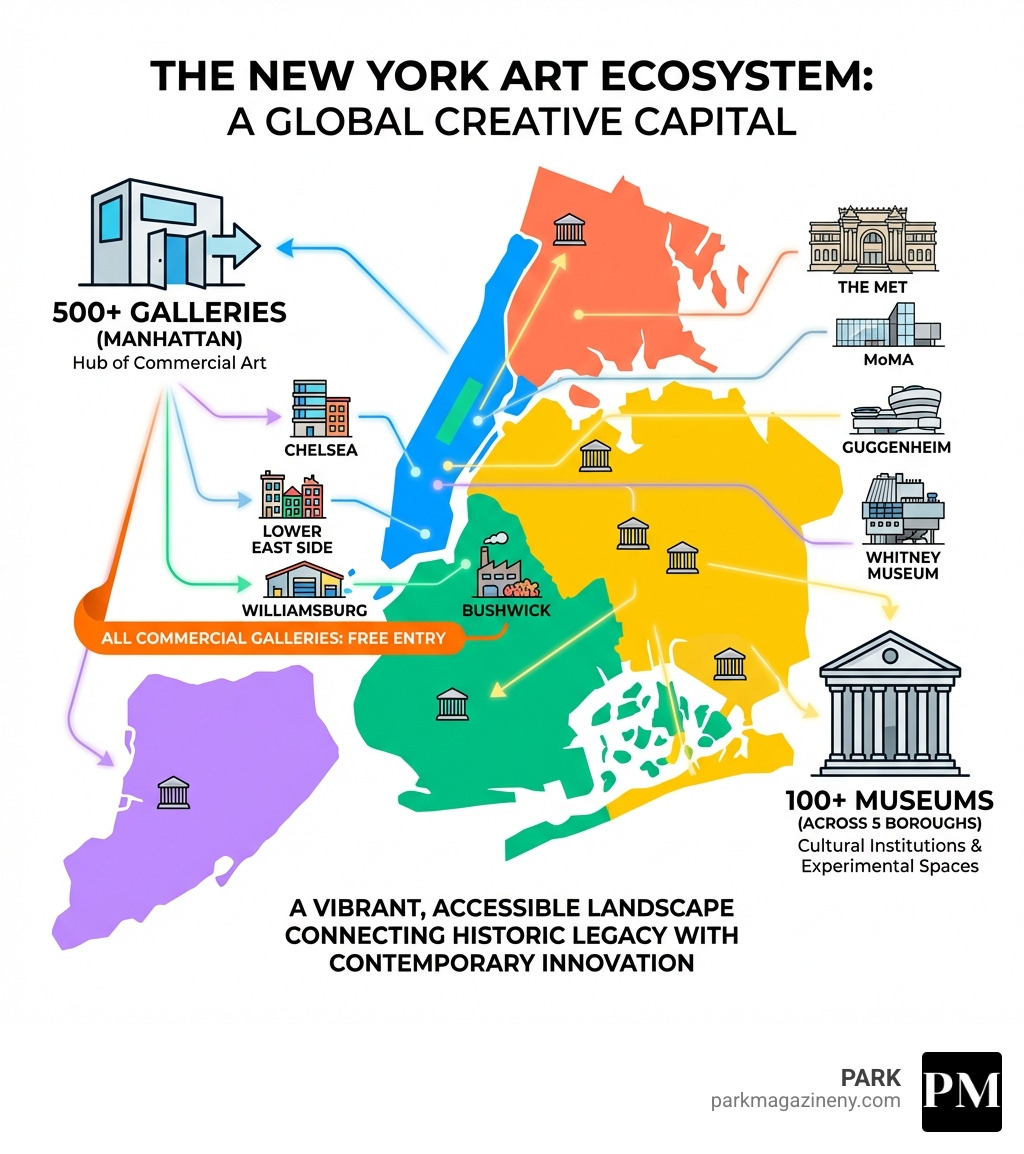
The New York art scene is one of the most vibrant and influential cultural ecosystems in the world. With over 500 galleries in Manhattan alone, more than 100 museums across the five boroughs, and all commercial galleries free to enter, the city offers unparalleled access to both established and emerging art.
Quick Facts About the New York Art Scene:
- 500+ galleries in Manhattan, with thousands more across all boroughs
- 100+ museums spanning the Metropolitan Museum of Art to small experimental spaces
- Free admission to all commercial art galleries
- Global magnet attracting contemporary artists from every continent
- Diverse neighborhoods each with distinct artistic character—from Chelsea’s blue-chip galleries to Bushwick’s street art
“New York is one of the most artistically vibrant cities in the world and a magnet for contemporary artists from around the globe,” notes an NYU course description on the city’s art ecosystem.
But the scene isn’t without its challenges. As institutions slash budgets and corporate sponsorships evaporate, small and mid-sized galleries face unprecedented strain. Yet this pressure has sparked innovation—a bold new wave of artist-led spaces, experimental non-profits, and community-driven galleries are reshaping what it means to make and show art in New York.
Whether you’re a longtime collector or simply curious about where culture happens, understanding the New York art scene means grasping both its historical legacy and its present-day evolution. From the iconic 1980s that produced Keith Haring and Jean-Michel Basquiat to today’s diverse, socially engaged practices, the city remains in constant artistic conversation with itself and the world.
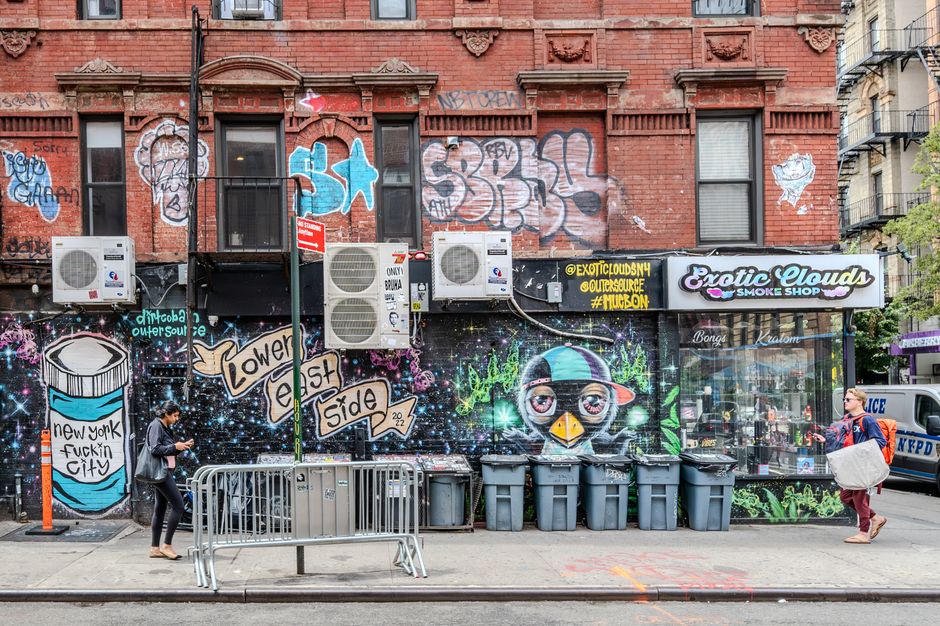
The Current Landscape: Resilience and Reinvention
The current New York art scene is a fascinating paradox: a global powerhouse feeling the strain of economic shifts, yet continually reinventing itself with fierce determination. We’ve seen institutions slash budgets and corporate sponsorships evaporate, hitting small and mid-sized galleries hardest. This creates a real risk of cultural scarcity and homogenization, where only the largest, most commercially viable spaces can survive. However, New York’s artistic spirit is not easily quelled. This pressure cooker environment has birthed a vibrant counter-movement—a bold new wave of risk-taking spaces, artist-led initiatives, and non-profits dedicated to experimentation and supporting new voices.
Defining the Current New York Art Scene
Today’s New York art scene is characterized by an incredible diversity of expression. Artists and institutions are increasingly addressing pressing social issues, with a strong emphasis on socially engaged art that reflects the city’s complex cultural fabric. We’re witnessing a surge in artist-led initiatives and non-profit spaces that prioritize community building and offer platforms for experimentation, often focusing on underrepresented artists and narratives. Digital art integration is also becoming more prominent, pushing the boundaries of traditional art forms. The scene thrives on its global influences, attracting talent from every corner of the world, making it a truly international hub for contemporary art. This constant influx of diverse perspectives ensures the scene remains dynamic, constantly evolving, and deeply relevant.
Challenges and the Rise of the New Guard
The challenge of cultural scarcity and homogenization is a significant concern. When mega-galleries and market-driven art dominate, there’s a risk of losing the experimental edge and diverse voices that have always defined New York. Yet, this very challenge has galvanized a “new guard” of galleries and art spaces. These emerging players are shaping the contemporary art landscape by adopting innovative models and fostering community-driven spaces.
Consider Francis Irv: born from a shared appreciation for overlooked artists, its founders Shane Rossi and Samuel Marion Wilken created a space that evolved from an impromptu exhibition in Chinatown. They focus on artists their peers weren’t looking at, building a community sustained by conviction and mutual trust.
Then there’s Soft Network, co-founded in 2021, which tackles a critical structural gap in the art world: supporting artists’ estates. Without these estates, our understanding of art would be too narrowly defined by the market. Soft Network works to bring visibility to this essential “legacy work,” advocating for formalized structures and philanthropic aid, especially for family operations without non-profit status. They even helped prepare an exhibition for an artist whose archive was bequeathed to a friend.
And let’s not forget KAJE, a non-profit art space in industrial Brooklyn established in 2018. KAJE is dedicated to “forms of investigation the market overlooks or deems unprofitable,” offering diverse programming like research residencies, performances, and publications. Their commitment to securing a rare 32-year lease (when commercial leases rarely extend beyond 15) signals a profound dedication to establishing a lasting presence and fostering discourse around novel, market-resistant art forms. These spaces, like the former Dunkunsthalle which embodied resourcefulness and commented on cultural scarcity, are vital in preserving the experimental heart of the New York art scene.
The Ever-Evolving New York Art Scene: A Neighborhood Guide
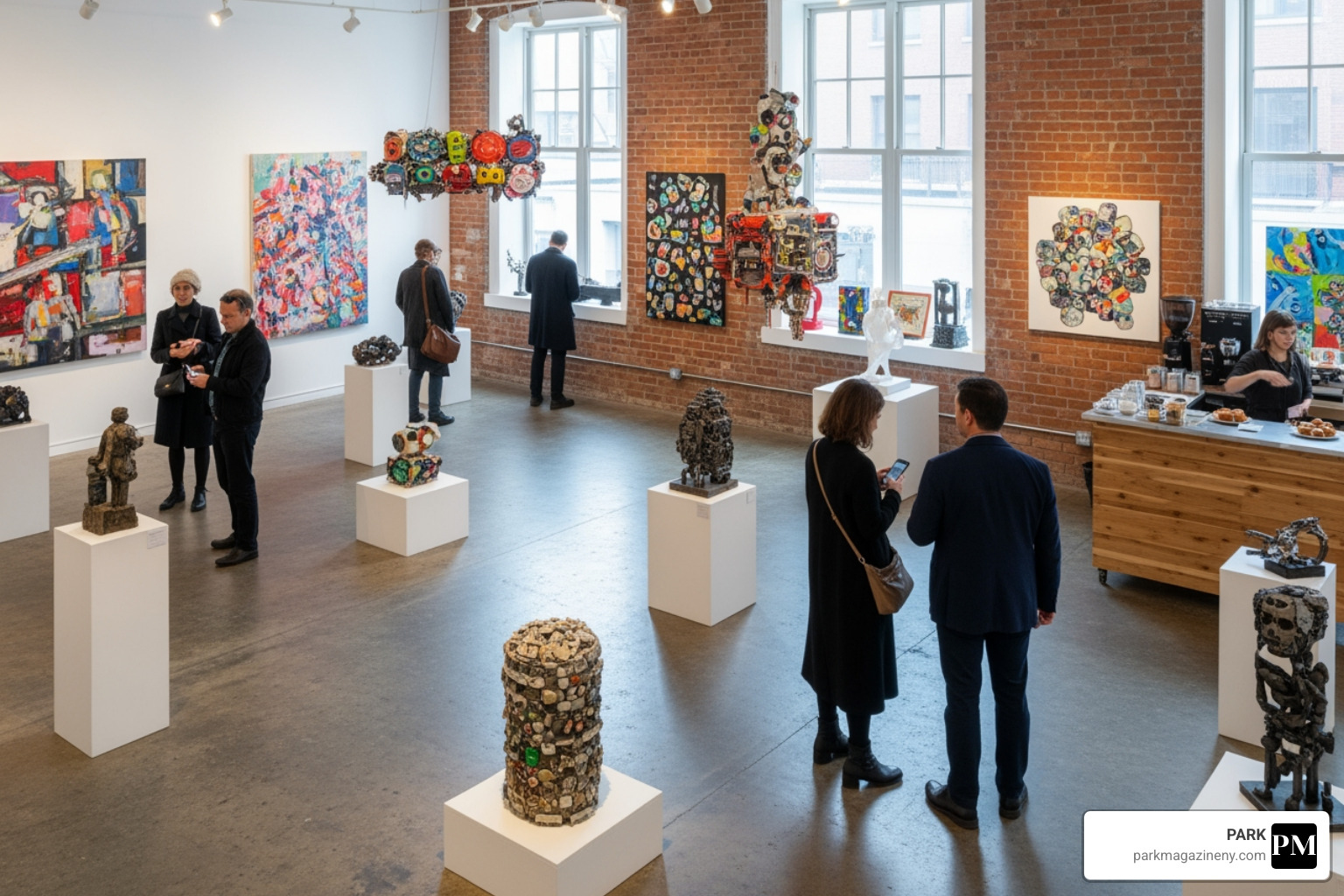
The beauty of the New York art scene lies in its decentralized vibrancy. While Manhattan has long been the epicenter, each borough and neighborhood contributes its unique flavor to the city’s rich art ecosystem. Whether you’re a seasoned gallery-hopper or a curious newcomer, navigating this sprawling artistic landscape is an adventure. To help you explore, we’ve found a handy tool: Navigate the city with this art map.
Manhattan: Chelsea and the Lower East Side
Manhattan’s contributions to the New York art scene are legendary.

Chelsea is often considered “the big leagues” of the art world. Here, you’ll find imposing, architecturally neat spaces showcasing work from some of the world’s most major player artists. Galleries like David Zwirner Gallery (with two locations) and Hauser & Wirth embody the Chelsea vibe, often featuring large-scale retrospectives and significant contemporary works. Other notable spaces include Andrea Rosen Gallery (known for video art) and Gladstone Gallery (famous for installations and artists like Matthew Barney).
Just a short trip downtown, the Lower East Side (LES) offers a different, yet equally compelling, experience. With over 70 galleries in a one-mile radius, the LES is a must for any art enthusiast. The easiest place to start is this website which offers a handy guide to every single one of them. Here, the focus shifts to contemporary and emerging artists, often housed in more intimate, experimental settings. Galleries like Feuer / Mesler and Shin Gallery (which occupies both sides of a street corner) showcase youthful installation artists and diverse curatorial tastes. On Stellar Rays is dedicated to new, contemporary minimalistic work, while e-flux is a hub for critical discourse. The New Museum, a multi-floor museum dedicated to contemporary art from around the world, also anchors this vibrant district.
Beyond these two titans, neighborhoods like NoHo (North of Houston) have transformed from warehouse districts into sophisticated cultural hubs. NoHo “has generated an art scene like no other,” blending galleries showcasing up-and-coming artists and photographers with public theaters and a thriving creative spirit.
Brooklyn: Bushwick, Williamsburg, and Beyond
Brooklyn has firmly cemented its place as an integral part of the New York art scene, offering a grittier, more experimental counterpoint to Manhattan’s established institutions.
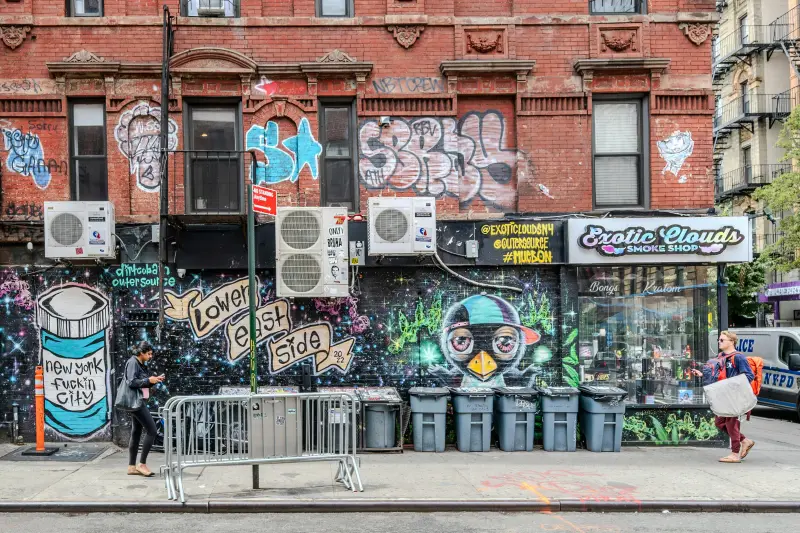
Bushwick is arguably the mecca for street art and graffiti lovers. Its vibrant energy pulses with creative energy and global talent. We highly recommend a Walking Tour through one of the world’s hottest graffiti scenes, where you’ll find everything from bold murals to subtle stencils. The BogArt is a massive former manufacturing plant now housing almost twenty galleries with diverse tastes, including The Parlour and Silent Barn.
Williamsburg has long been a hotbed for independent galleries. Journal Gallery is a notable space, and 17 Frost Gallery exclusively showcases street artists in an old garage setting. Front Room Gallery, one of Brooklyn’s oldest contemporary art galleries (opened in 1999), focuses on emerging and mid-career artists, particularly in photography, conceptual art, and video.
Even Greenpoint, despite increasing rent prices causing some galleries to close, remains a vibrant spot for miniature galleries. You can find an updated tumblr of all galleries currently active in Greenpoint to guide your exploration.
And don’t overlook South Brooklyn. While not as densely populated with galleries, it boasts noteworthy spaces like Pioneer Works, arguably one of Brooklyn’s most beautiful art spaces, and Open Source. These venues often host experimental work and community events, proving that Brooklyn’s contribution to the New York art scene is as diverse as the borough itself.
The DNA of the Scene: Historical Roots and Lasting Legacies
To truly understand the contemporary New York art scene, we must acknowledge its rich historical influences and the legacies that continue to shape it. From the Abstract Expressionists who transformed the city into an artistic capital to the vibrant street artists of the 1980s, New York has always been a city in constant conversation with itself, its artists drawing inspiration from its gritty realities and boundless possibilities. The city acts as both muse and canvas, fostering an environment of continuous evolution.
Historical Roots of the New York Art Scene: The Iconic 80s
The 1980s were a pivotal decade that profoundly shaped the modern New York art scene. This era was a direct response to a complex socio-political and cultural environment. The seeds of this artistic zeitgeist were sown by the booming economy under Ronald Reagan’s presidency, which, despite its prosperity, also led to a widening wealth gap. This economic backdrop was juxtaposed with intense social turmoil: the devastating AIDS epidemic and the rampant crack epidemic, alongside escalating Cold War tensions. These harsh realities became fertile ground for artistic expression.
Against this backdrop, vibrant subcultures emerged, including the burgeoning hip-hop scene and the increasingly visible LGBTQ+ community. This mix fueled an intense period of creativity. Artists became “art activists,” using their work as a powerful call to action. With traditional art institutions often hesitant to support activist themes, artists took matters into their own hands, creating their own show spaces, particularly in the East Village. This led to the explosive growth of the Street Art movement, making art accessible and challenging conventional notions of galleries.
This era also saw art become deeply enmeshed with celebrity, giving rise to the “art star.” Artists like Jean-Michel Basquiat (who tragically died at 27 from a heroin overdose) and Keith Haring (who died at 31 from AIDS-related illnesses) rose to international fame. Basquiat, with his Haitian, Puerto Rican, and American identity, confronted racism and police brutality, amassing an oeuvre of around 1,000 paintings and 2,000 drawings. Haring championed accessibility, using his art to address critical social issues like AIDS and LGBTQ+ rights, environmentalism, and drug abuse, famously creating his “Crack Is Wack” mural.
Andy Warhol, a Pop Art icon, served as a mentor to both Basquiat and Haring, even collaborating on over 200 artworks with Basquiat. Other influential figures included Jeff Koons, whose early work like ‘The New’ questioned consumerism, and Richard Prince, who appropriated images to critique media representation. The collaborative spirit of the time, often seen in places like Studio 54, fostered a generational development of ideas. The recognition from influential figures like art critic and Metropolitan curator Henry Geldzahler further cemented the global impact of this electrifying period. The legacy of these artists and the social consciousness embedded in their work continue to resonate deeply within the contemporary New York art scene.
What to See Now: A Curated Guide to Exhibitions and Public Art
The New York art scene is in perpetual motion, offering a dazzling array of exhibitions and public art installations across its diverse boroughs. Whether you’re seeking profound museum experiences or engaging outdoor art, there’s always something new to find. We’ve gathered some highlights to guide your next artistic adventure.
Museum Highlights
New York’s museums are global titans, constantly refreshing their programming with groundbreaking exhibitions.
- The Metropolitan Museum of Art: Always a must-visit, The Met features several compelling shows. We can explore works like George Morrison’s New York and the powerful Jennie C. Jones on the Roof Garden Commission, offering unique perspectives on art and the city. Later in the year, we can look forward to Man Ray: When Objects Dream, exploring his “rayographs.”
- Museum of Modern Art (MoMA): MoMA continues to push boundaries with exhibitions like Rafaël Rozendaal and Woven Histories: Textiles and Modern Abstraction, which explores the intricate connection between textiles and modern art.
- Solomon R. Guggenheim Museum: The iconic spiral hosts dynamic contemporary art. Be sure to catch Beatriz Milhazes for vibrant compositions and Rashid Johnson: A Poem for Deep Thinkers, a profound exploration of identity and culture.
- Whitney Museum of American Art: Focused on American art, the Whitney presents thought-provoking shows like Christine Sun Kim: All Day All Night, exploring sound and silence through visual art.
- Brooklyn Museum: Head to Brooklyn for a diverse range of exhibitions. Current highlights include Solid Gold, showcasing over 500 golden treasures, and Nancy Elizabeth Prophet, an artist who carved her place in an unwelcoming art world.
- New Museum: As we look to the future, the New Museum is set to open its 60,000-square-foot building expansion on March 21, 2026, with the inaugural exhibition New Humans: Memories of the Future. Admission will be free during the opening weekend, a perfect opportunity to see new commissions and experience this evolving institution.
- Studio Museum in Harlem: After seven years, the Studio Museum is reopening with an exhibition dedicated to the late artist, activist, and educator Tom Lloyd, exploring his work and the museum’s founding history. This landmark reopening is a testament to the enduring power of Black art and community.
Gallery Shows and Public Installations
Beyond the grand museum halls, New York’s galleries and public spaces offer an intimate and often surprising encounter with art.
Manhattan’s gallery districts are buzzing with activity. In Chelsea, we can find shows like Tiona Nekkia McClodden at White Cube, Dalton Paula at Lisson Gallery, and Sasha Gordon at David Zwirner. The Lower East Side and SoHo also host a plethora of exciting exhibitions, such as Lisa Oppenheim at Tanya Bonakdar Gallery, Ambera Wellmann at Hauser & Wirth, and Gabriel Orozco at Marian Goodman. Even more intimate experiences await with artists like Agnieszka Pestka, who brings avant-garde sculpting to Chelsea with her exhibition “Between Jasmine Flowers,” now open by appointment at her showroom.
Public art is woven into the very fabric of New York. The High Line, an liftd park, frequently features captivating installations, including Mika Rottenberg’s Foot Fountain (pink), a playful critique of production and beauty. Socrates Sculpture Park in Long Island City is always a treat, offering large-scale works with stunning views of the Manhattan skyline. Don’t forget the hidden gems within our transit system, like Fred Tomaselli’s Wild Things mosaic at the 14th Street Subway Complex, part of MTA Arts & Design, changing commutes into artistic journeys. Other notable public art includes Hilma’s Ghost’s Abstract Futures at Grand Central Station and Thaddeus Mosley’s Touching the Earth at City Hall Park.
Frequently Asked Questions about the New York Art Scene
We often get asked about the practicalities of exploring the New York art scene. Here are some common questions and our insights to help you plan your artistic adventures.
Is it expensive to experience the New York art scene?
Not at all! One of the most wonderful aspects of the New York art scene is its accessibility. All commercial art galleries in New York City are free to enter. That’s over 500 galleries in Manhattan alone, offering countless hours of free artistic exploration. While many major museums have admission fees, they frequently offer free admission days or hours, student discounts, or “pay-what-you-wish” options. Public art, from massive murals in Bushwick to installations on The High Line, is always free and open to everyone. So, you can easily immerse yourself in world-class art without breaking the bank.
Which neighborhood is best for seeing art?
The “best” neighborhood really depends on your specific interests!
- Chelsea is ideal if you’re looking for established, blue-chip artists and large-scale, museum-quality exhibitions. It’s home to many of the world’s most prominent galleries.
- The Lower East Side (LES) is perfect for those interested in contemporary and emerging talent. It offers a more intimate and experimental gallery experience, often showcasing cutting-edge work.
- Bushwick, in Brooklyn, is the undisputed champion for vibrant street art and graffiti. A walking tour here is an absolute must for anyone who loves urban art.
- Williamsburg and Greenpoint also offer a great mix of independent galleries and artist-run spaces.
Each neighborhood contributes a unique energy and focus to the broader New York art scene, so we recommend exploring a few to find your personal favorite.
How has the art scene changed in recent years?
The New York art scene has certainly undergone significant evolution in recent years. Post-pandemic shifts have accelerated trends already in motion, leading to an increased focus on diversity and inclusion. There’s a stronger push to represent artists from various backgrounds, with museums and galleries actively working to decolonize narratives and uplift underrepresented voices.
We’ve also seen the rise of smaller, more resilient artist-run spaces and non-profits, particularly in Brooklyn, which are challenging traditional gallery models. These spaces prioritize experimentation, community building, and supporting artists whose work might be overlooked by the commercial market. However, economic pressures remain a constant challenge, with budget cuts and evaporating corporate sponsorships forcing many smaller institutions to adapt and innovate, as we discussed earlier with galleries like Francis Irv and KAJE. The scene is constantly adapting, proving its enduring resilience and capacity for reinvention.
Conclusion
The New York art scene is more than just a collection of galleries and museums; it’s a living, breathing entity, a dynamic ecosystem that continually reinvents itself. With its unparalleled density of artistic institutions, from hundreds of commercial galleries (all free to enter, mind you!) to over a hundred museums across all five boroughs, New York remains a global magnet for artists and audiences alike. It’s a city in constant artistic conversation, where historical legacies meet cutting-edge innovation, and every street corner can hold a piece of profound expression.
Despite economic strains and the challenge of cultural homogenization, the resilience and ingenuity of New York’s artists and art spaces shine through. From the bold, risk-taking initiatives in Brooklyn to the established powerhouses in Manhattan, the scene thrives on its diversity, its commitment to new voices, and its unwavering belief in the transformative power of art.
We hope this guide has inspired you to dig deeper into the heart of New York’s artistic soul. For more insights into the city’s vibrant cultural landscape, explore more of New York’s art and culture with PARK Magazine.