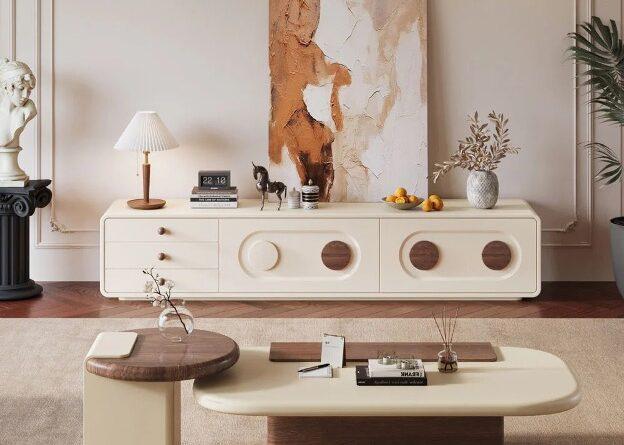
How Coffee Table Design Sets the Tone of a Living Room
In a living room, the atmosphere is rarely created by a single bold statement. More often, it emerges from a series of quiet, intentional choices. Among these, the coffee table plays a surprisingly influential role. It is rarely the largest piece in the room, yet it sits at the center of daily life—both physically and visually—shaping how the space feels the moment someone enters.
A coffee table does not demand attention, but it guides it. Through its proportions, materials, and placement, it quietly sets the tone of the living room, influencing whether a space feels calm or cluttered, warm or restrained, intentional or accidental.
The Quiet Power of the Coffee Table
Unlike sofas or media units, coffee tables do not dominate a room. Their influence is subtler. Positioned between seating, they become the natural point of convergence—where eyes rest, hands reach, and movement flows around them. Because of this, even small design decisions have an outsized impact.
A poorly chosen coffee table can interrupt circulation or make a room feel visually busy. One that is too heavy can weigh the space down, while one that feels out of proportion can disrupt balance. In contrast, a well-considered coffee table recedes just enough, allowing the room to breathe while still providing structure.
This quiet presence is precisely what makes the coffee table so powerful. It shapes the atmosphere not by asserting itself, but by supporting everything around it.
Scale and Shape: How Form Influences Feeling
Form is often the first design element we respond to, even if subconsciously. The shape of a coffee table determines how people move through a living room and how they relate to one another within it.
Round and Oval Forms Encourage Ease
Round and oval coffee tables introduce softness into a space. Their curved edges remove visual tension and create a sense of openness, especially in seating areas designed for conversation. Without sharp corners, these forms encourage movement and make a room feel more fluid.
In living rooms where comfort and approachability are priorities, rounded shapes help establish a relaxed rhythm. They invite people to gather without imposing strict boundaries, reinforcing a sense of ease and continuity.
Rectangular Tables Create Structure and Balance
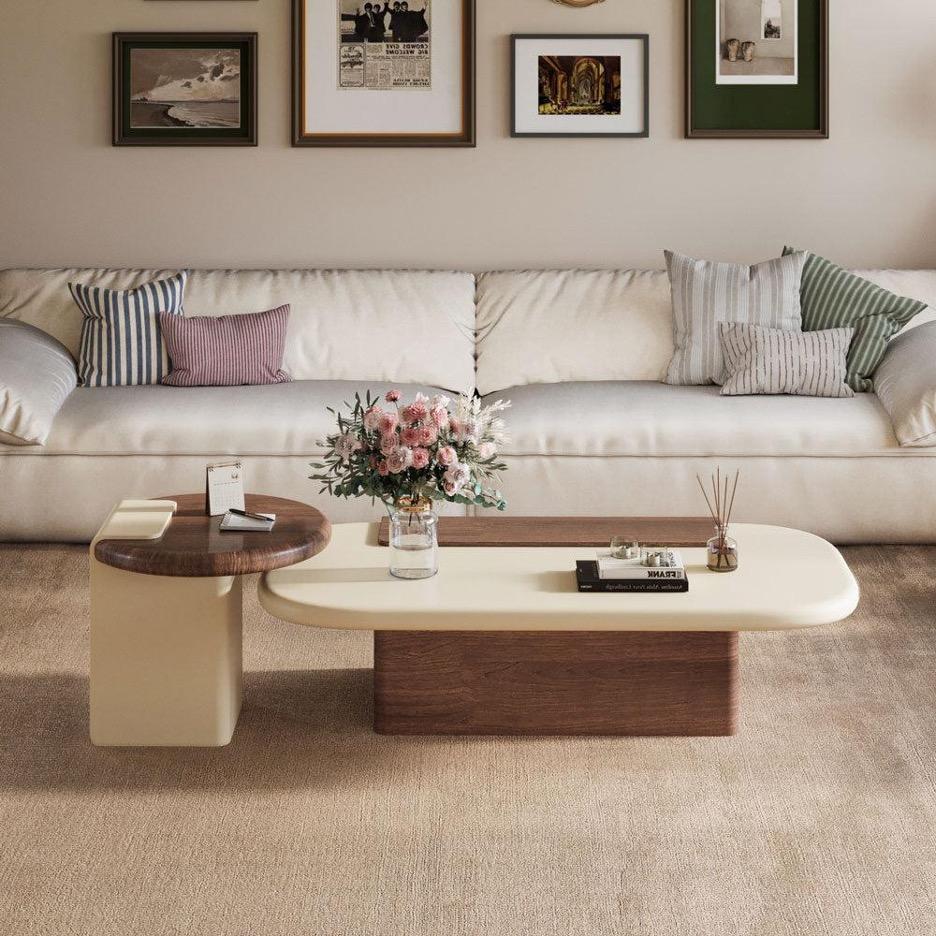
Rectangular coffee tables, by contrast, bring order and clarity. Their linear form aligns naturally with sofas and rugs, grounding the seating area and establishing visual balance. In rooms with defined layouts or architectural lines, this shape reinforces structure without becoming rigid.
The key is proportion. A rectangular table that respects the scale of the seating arrangement adds stability to the room, offering a sense of intention rather than formality.
In both cases, shape is less about preference and more about harmony—how the table relates to the surrounding elements.
Material as Mood: Texture, Weight, and Surface
If shape defines movement, material defines mood. The surfaces we see and touch influence how a space feels over time, especially in areas designed for daily use.
Wood grain introduces warmth and familiarity. Its natural variation adds depth without visual noise, making it well suited to living rooms meant to feel welcoming and lived-in. Wood surfaces tend to absorb light rather than reflect it sharply, contributing to a softer atmosphere.
Sintered stone, on the other hand, brings a sense of quiet solidity. Its refined surface and subtle texture lend a grounded quality to the room, offering contrast without excess. When paired with soft finishes, stone surfaces can feel calm rather than cold, adding visual weight without heaviness.
Across many contemporary interiors, coffee tables that balance tactile materials with restrained finishes are increasingly favored. These choices allow the table to participate in the room’s atmosphere without competing for attention.
Material, when thoughtfully chosen, becomes a subtle emotional cue—one that influences how a space is experienced throughout the day.
Supporting Flow: The Coffee Table as a Spatial Connector
Beyond form and material, placement determines how a coffee table supports the living room’s flow. A well-positioned table does not block movement or demand adjustment. Instead, it allows people to move naturally around it, reinforcing the room’s rhythm.
Height plays a critical role. Tables that align comfortably with seating encourage interaction without dominating the visual plane. Similarly, leaving negative space around the table prevents the room from feeling crowded, even in smaller layouts.
The most effective coffee tables act as connectors rather than obstacles. They link seating areas, anchor rugs, and guide circulation, all while remaining visually unobtrusive. In this way, the table supports the living room’s function without asserting control over it.
Flow, after all, is as much about what is absent as what is present.
Balanced Design in Practice: A Subtle Look at Arrtle Furniture Brand
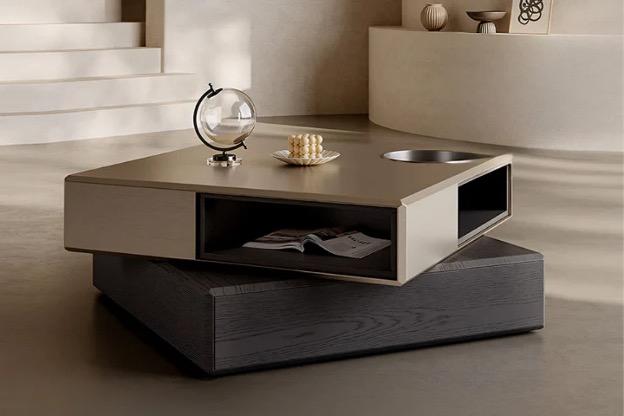
Some brands approach coffee table design with an emphasis on balance rather than statement-making. Arrtle home furniture reflects this design sensibility through collections that prioritize proportion, material harmony, and visual restraint.
Arrtle coffee tables are designed to sit comfortably within a range of interiors rather than define them. Shapes such as round, rectangular, and oval offer flexibility in layout, while material choices—wood grain, sintered stone, and soft finishes—support a variety of atmospheric goals.
Color options are intentionally varied yet controlled, allowing the table to complement different living room palettes without overwhelming them. The result is furniture that supports the room’s flow, acting as a quiet anchor rather than a focal point.
In Arrtle, the coffee table becomes less about utility or display and more about integration—how a single piece can contribute to the overall mood of a space through thoughtful design.
When Design Choices Feel Intentional
The atmosphere is not created through accumulation. It emerges when each element in a room serves a clear purpose and relates meaningfully to the others. The coffee table, though often overlooked, plays a central role in this balance.
Through careful attention to scale, shape, material, and placement, coffee table design can transform a living room from a collection of objects into a cohesive environment. When these choices are made with restraint, the result feels natural rather than styled.
In the end, a living room’s tone is set not by what stands out, but by what quietly belongs. The coffee table, in its understated presence, often reveals just how intentional a space truly is.