More Than Just a Haircut: Why the Salon Chair Matters So Much to Women
On the surface, going to the hair salon looks like a simple errand. You book an appointment, sit in a chair, stare at your reflection for an hour or two, and walk out with lighter hair, darker hair, straighter hair, curlier hair, or simply better hair. But for many women, the salon is not just a place of grooming. It is a ritual, a refuge, a social space, and often a quiet form of emotional care. It is where identity is shaped, stress is released, and confidence is rebuilt — one snip, wash, and blow-dry at a time.
To understand why the salon matters so deeply, you have to look beyond the mirror.
A Space Designed for Women
Historically, few public spaces have been built primarily with women in mind. Cafés, gyms, bars, offices, and even medical spaces often prioritize speed, efficiency, or productivity. The hair salon is different. It is intentionally slow. You are encouraged to sit, to wait, to be cared for. Someone brings you tea or coffee. A stylist asks how you are doing — not just what you want done. The lights are warm, the chairs are soft, and the mirrors are forgiving.
For many women who spend much of their lives caring for others — children, partners, parents, coworkers — the salon is one of the rare places where care flows toward them instead. You do not cook, clean, manage, or perform. You receive. This reversal alone can feel luxurious, even healing.
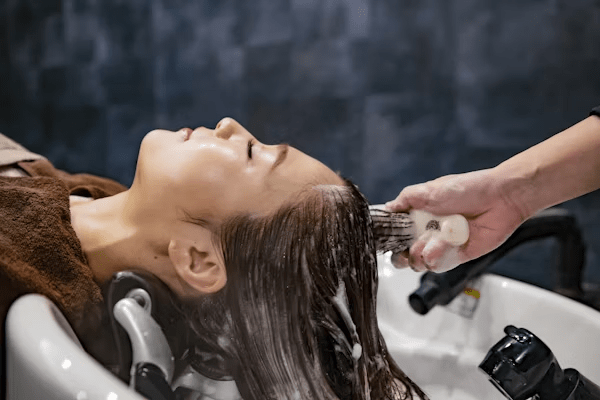
The act of being touched in a gentle, non-intrusive way — someone washing your hair, massaging your scalp, arranging your appearance — can be profoundly soothing. Human touch lowers stress hormones and signals safety. In a world where women are often touched without consent or with expectation, the salon offers a structured, respectful, and consensual form of physical care. It is touch without demand.
Hair as Identity
Hair is not just aesthetic; it is symbolic. It carries messages about age, health, culture, religion, rebellion, conformity, grief, power, and femininity. Changing your hair can feel like changing a chapter of your life.
Women often go to the salon at emotional turning points: after a breakup, before a wedding, following childbirth, during menopause, after illness, when starting a new job, or when reclaiming themselves after burnout. The phrase “I need a change” frequently means “I need to feel different inside, and I’ll start on the outside.”
Cutting hair can feel like shedding the past. Coloring it can feel like becoming bolder, softer, younger, freer, or more visible. Even a simple trim can restore a sense of control when life feels chaotic. The salon becomes a place where identity is not just expressed but actively crafted.
A Confessional Chair
Salons are famous for conversation. The stylist often becomes a hybrid figure: part artist, part therapist, part bartender, part priest. You talk about your job, your relationship, your stress, your hopes, your disappointments. You confess things you might not even tell your friends.
Why? Because the relationship is intimate but bounded. The stylist listens but does not judge. They care, but they are not entangled in your life. There is safety in that.
This emotional unloading matters. Many women are socialized to be emotionally available to others while minimizing their own needs. The salon becomes a socially acceptable space to talk about yourself without apology. It is one of the few places where saying “I’m tired,” “I’m overwhelmed,” or “I don’t feel like myself” feels natural and unselfish.
Community and Belonging
In many cultures — especially within Black, Latina, Middle Eastern, and South Asian communities — salons and beauty shops function as community hubs. They are spaces where stories are shared, advice is given, news travels, and cultural knowledge is passed down.
In these spaces, women see themselves reflected not only in mirrors but in each other. They see aging, motherhood, illness, joy, ambition, and survival embodied in real people. The salon becomes a place where beauty is not a narrow ideal but a collective experience shaped by culture and connection.
This sense of belonging can be deeply affirming, especially in a society that often isolates women or pits them against each other. In the salon, beauty is not competition; it is shared ritual.
The Emotional Afterglow
When a woman leaves the salon, she rarely leaves with just different hair. She leaves standing a little taller. She makes more eye contact. She smiles at her reflection. She walks differently.
This is not vanity. It is alignment. When the outer self reflects the inner self — or at least the self she wants to feel like — it creates coherence. And coherence feels like confidence.
This confidence can ripple outward. A woman who feels good about herself is more likely to assert boundaries, pursue opportunities, show up socially, and take risks. In that sense, the salon is not superficial at all. It is preparatory. It equips women to re-enter the world with more presence.
Why It Matters
To dismiss the salon as trivial is to misunderstand how humans work. We are embodied beings. How we look affects how we feel. How we feel affects how we act. How we act shapes our lives.
For women in particular — whose bodies and appearances have always been politicized, judged, controlled, and scrutinized — choosing how to present oneself is an act of agency. The salon is one of the few spaces where that agency is centered, supported, and celebrated.
So yes, it is about hair. But it is also about rest, identity, touch, conversation, community, and self-renewal. It is about being seen, cared for, and reshaped — not because you are broken, but because you are allowed to evolve.
The salon chair is not just a seat. It is a pause button. A mirror. A threshold between who you were when you walked in and who you feel like when you walk out.
And sometimes, that small transformation is exactly what makes everything else feel possible again.