Power Plants and Heavy Industry: How LOLER and LOTOTO Keep Workers Safe Around Equipment
Power plants and heavy industry run large systems that hold high loads, high pressure and high energy. Workers move around cranes, boilers, turbines, conveyors and process lines every day.
When something goes wrong, the result is quick and often severe. Loads fall. Machines pull people in. Energy releases without warning. These sites rely on clear rules and set controls because routine tasks can turn dangerous if a single step is missed.
This article explains how LOLER and LOTOTO systems work and why they matter on sites where the margin for error is small.
How LOLER fits into UK safety law
The Lifting Operations and Lifting Equipment Regulations (LOLER) sit within the wider Health and Safety at Work Act framework. LOLER works alongside the Provision and Use of Work Equipment Regulations (PUWER), which cover general machinery. Where PUWER focuses on suitability, guarding and maintenance, LOLER sets rules for safe lifting operations.
LOLER applies to all lifting equipment used at work. This includes overhead cranes in turbine halls, hoists in workshops and slings used by contractors. The law requires employers to plan lifts properly, ensure competent people carry them out and keep equipment in a safe condition through inspection and examination. These duties apply whether the lift is routine or complex.
Key LOLER duties in power plants and heavy industry
LOLER duties shape how lifting work is planned and controlled on site. They guide how cranes move loads around tight spaces and how teams set up lifting accessories. Duty holders should undergo LOLER training to gain a greater understanding of their duties.
Lifting equipment covered by LOLER
LOLER covers any equipment that lifts or lowers a load. Common items include overhead travelling cranes, mobile cranes, hoists, chain blocks, shackles, webbing slings and lifting beams. These items fail when damaged or misused, so knowing what counts as lifting equipment helps teams manage it.
Planning every lift as an operation
LOLER requires each lift to be planned. Even simple lifts need a set approach that considers the load weight, load centre, travel path and ground conditions. For non-routine lifts, a method statement supports the plan, so each worker knows their role.
Roles and competence for lifting teams
Lifts need competent people. Someone plans the lift. Someone supervises it. Trained workers carry it out. Each role must understand the equipment, site risks and signals used during the lift.
Inspection and thorough examination
Pre-use checks happen before each shift. In service inspections follow a set schedule. A thorough examination by a competent person takes place at statutory intervals. These steps catch wear, cracks, deformation and other faults.
Safe working loads and equipment limits
Every item must show its safe working load. Workers must not use equipment above its rating. Conditions such as high temperature or sharp edges may reduce the true safe load, so teams must adjust for real site factors.
Records, reports and fault follow-up
Teams must keep clear records of examinations. Serious defects need written reports and immediate action. Unsafe equipment must be taken out of service until repaired or replaced.
LOTOTO basics for high-energy equipment
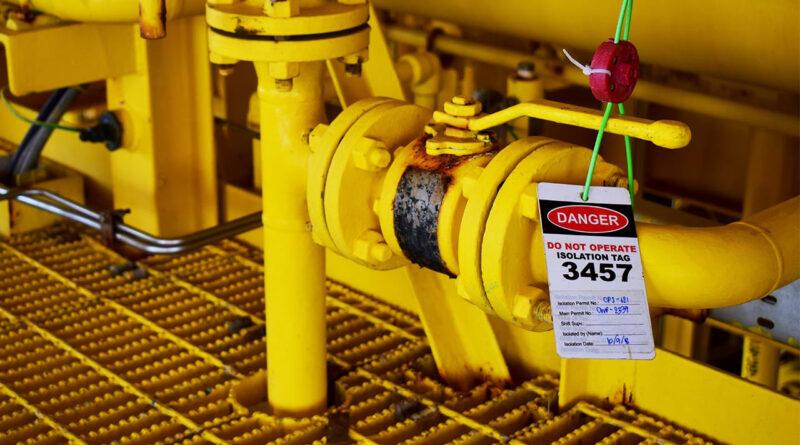
Lock out tag out try out (LOTOTO) is a simple but strict way to stop machines from starting or releasing energy during work. It involves isolating each energy source, then locking and tagging it. Before work starts, the worker tests the system to confirm it is dead.
Sites use LOTOTO because modern equipment stores energy in many forms. Electrical power is only one. Machines also hold mechanical tension, hydraulic pressure, pneumatic force, steam, heat and chemical energy. If any of these remain active, the job becomes unsafe. LOTOTO removes that risk by forcing workers to prove isolation before touching the equipment.
LOTOTO in practice on plant and heavy lines
LOTOTO procedures guide work on boilers, turbines, conveyors and process lines. The process starts with identifying the equipment and its energy sources, then moves to controlled shutdown, isolation, locking and confirmation tests. LOTOTO training can help workers use each step in the right order on a live plant.
Identify all energy sources
Teams map each type of energy connected to the equipment. This includes electrical feeds, backup supplies, mechanical drives, hydraulic systems, air lines and stored energy inside springs or flywheels. Identification prevents missed hazards.
Shut down the system in a set order
The system must shut down in a sequence that reduces movement and pressure. This allows stored energy to run down before isolation. If the sequence is incorrect, energy can remain trapped.
Isolate and secure each energy source
Once the system powers down, workers isolate each energy source so it cannot restart or flow. Electrical isolators are opened or racked out. Valves are shut. Mechanical drives are blocked or disengaged. The aim is to remove every possible route for energy to reach the equipment while people are working on it.
Apply locks to each isolation point
Each worker places a personal lock on every isolation point. If several workers are involved, they use a group lock box to keep keys secure. Personal locks stop others from restoring power by mistake because only the worker who placed the lock holds the key.
Tag with clear information
Tags show who applied each lock, why the work is taking place and when it began. Tags prevent confusion when tasks overlap or shift patterns change. Clear information helps supervisors and other teams understand which systems are safe to use and which remain isolated.
Try out and test for zero energy
Workers then try out the controls and test the equipment to confirm that isolation worked. This may involve pressing start buttons, opening bleed points or checking gauges. If any movement or pressure remains, workers stop and repeat the isolation process until the system is fully safe.
Control during the job
During long jobs, conditions can change. Pressure may build in closed systems or other teams may work nearby. Workers check isolation points regularly. They keep areas clear and maintain communication with supervisors so no one removes a lock or restarts equipment without approval.
Remove locks and restart safely
When work is complete, workers clear tools, replace guards and check that colleagues are out of harm’s way. Locks come off in the same careful order they were applied. Once isolation points return to normal positions, the team restarts the equipment and watches for signs of abnormal behaviour.
Using LOLER and LOTOTO together on site
Some high-risk jobs need both LOLER and LOTOTO controls. A team might isolate a conveyor line using LOTOTO, then use lifting equipment under LOLER rules to remove a gearbox. Using both systems ensures the equipment stays safe while heavy components move through the work area. These combined tasks rely on clear planning, steady supervision and workers who understand both sets of duties.
Training keeps workers familiar with site rules and equipment. Permits confirm that jobs involving lifting or isolation have been reviewed. Checklists help teams follow each step even when tasks vary. These tools create steady habits that support safe work across the site.