The Ultimate Guide to Flagstaff Real Estate: What Makes This Market Unique
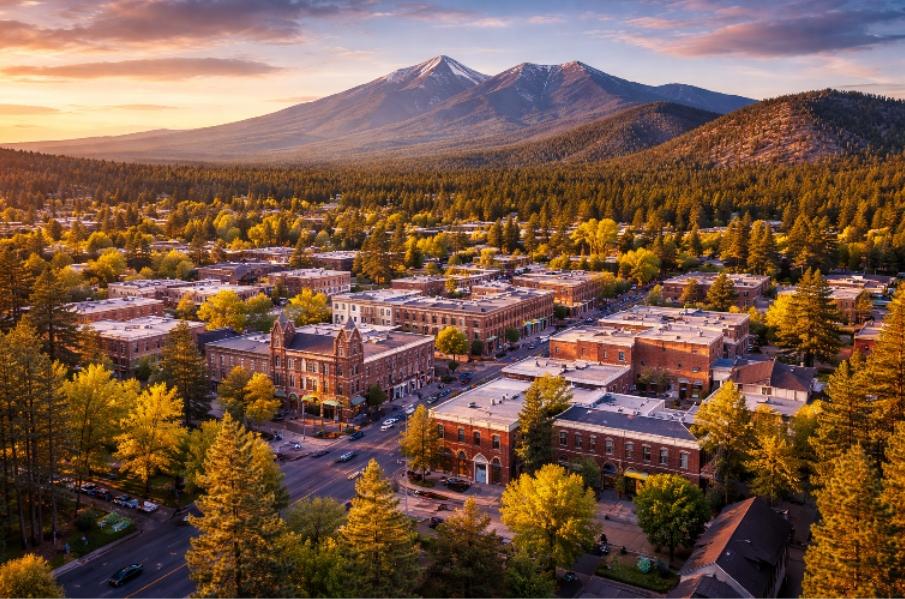
Flagstaff, Arizona is unlike almost any other real estate market in the state. While much of Arizona is known for desert landscapes and sprawling metro growth, Flagstaff stands apart with its mountain setting, pine forests, four-season climate, and strong sense of place. Sitting at around 7,000 feet in elevation near the San Francisco Peaks, Flagstaff attracts buyers for reasons that go far beyond affordability or short-term trends.
This guide takes an in-depth look at Flagstaff real estate—what drives demand, how the market behaves, who buys and sells there, and what makes transactions in this area distinctly different from many other parts of Arizona.
Why Flagstaff Real Estate Is So Different
The defining characteristic of Flagstaff real estate is scarcity. The city is geographically constrained by national forest land, mountains, and protected areas, which severely limits outward expansion. Unlike Phoenix or Tucson, Flagstaff cannot simply sprawl.
This limited supply, combined with consistent demand, creates a market that is often tight, competitive, and resilient—even during broader market slowdowns. Homes don’t come up for sale as frequently, and when they do, they tend to attract serious, long-term buyers rather than short-term speculation.
Flagstaff also has a strong identity as a lifestyle city. People don’t usually move there on impulse; they move with intention.
Who Buys Homes in Flagstaff?
Flagstaff attracts a diverse but specific group of buyers. Many are drawn by the natural environment, cooler climate, and access to outdoor recreation. Others come for education, healthcare, or employment opportunities tied to Northern Arizona University, medical centers, or research institutions.
Common buyer profiles include:
- Long-term residents and families putting down roots
- Second-home buyers looking for a mountain retreat
- Retirees seeking a cooler climate and quieter pace
- Professionals working remotely who value quality of life
- Investors focused on long-term rentals rather than quick flips
Because many buyers are lifestyle-driven, Flagstaff real estate tends to be less reactive to short-term market noise and more anchored in long-term value.
Housing Supply and Inventory Constraints
Inventory is one of the most defining elements of the Flagstaff market. New construction exists, but it’s limited by land availability, zoning restrictions, and environmental considerations. As a result, the supply of homes rarely meets demand, even during slower periods.
This dynamic means that:
- Well-located homes often sell faster than expected
- Price reductions are less common than in larger metro areas
- Buyers need patience and preparation
- Sellers often have leverage—but must price realistically
Unlike markets where dozens of similar homes compete with one another, Flagstaff listings are often unique, which makes pricing and valuation more nuanced.
Neighborhoods and Property Types
Flagstaff offers a wide range of property types, from historic homes near downtown to newer builds on the outskirts and custom mountain properties surrounded by forest. Each neighborhood has its own character, and buyers tend to focus heavily on location and setting rather than just square footage.
Homes near downtown or NAU often appeal to those who want walkability and access to amenities, while properties farther out attract buyers prioritizing privacy, views, and space. This diversity adds depth to the market but also means that comparable sales can be harder to find, reinforcing the importance of local knowledge.
Seasonal Patterns in Flagstaff Real Estate
Seasonality plays a larger role in Flagstaff than in many Arizona markets. Winters can slow activity due to weather, while spring and summer typically see increased listings and buyer interest. However, even during slower months, demand rarely disappears entirely.
Second-home buyers and investors often plan purchases around seasonal use, while primary residents may time moves based on school years or employment cycles. These patterns contribute to a market that ebbs and flows without extreme volatility.
Pricing Trends and Market Stability
Flagstaff home prices have historically shown strong resilience. While appreciation rates may not always match rapid-growth metro areas during boom periods, Flagstaff tends to hold value well during downturns. Limited supply and strong demand fundamentals support this stability.
Pricing is influenced heavily by:
- Location and proximity to amenities or forest land
- Lot size and views
- Property condition and energy efficiency
- Year-round accessibility (important in winter months)
Buyers are often willing to pay a premium for homes that check the right boxes, especially those that offer long-term livability rather than short-term appeal.
How Fast Sales Really Work in Flagstaff
Fast home sales are less common in Flagstaff than in larger, more liquid markets. Transactions here often involve thoughtful buyers, longer decision-making timelines, and detailed inspections—especially for older homes or properties in wooded areas.
That said, there are situations where speed matters. Sellers facing relocation, estate settlements, or major life changes may prioritize certainty and timing over maximum exposure. In these cases, cash homebuyers can play a practical role by facilitating fast sales that might otherwise take longer in a market where buyers are selective and inventory is limited.
Importantly, these transactions don’t indicate a weak market. They reflect the reality that Flagstaff real estate doesn’t always move quickly by default, so having alternative paths can be useful in specific circumstances.
What Sellers Need to Know
Selling a home in Flagstaff is less about hype and more about preparation. Buyers tend to be well-informed and detail-oriented, especially given the investment size and environmental considerations.
Successful sellers typically focus on:
- Accurate pricing based on truly comparable properties
- Addressing maintenance issues proactively
- Highlighting year-round access and insulation/heating features
- Presenting the property honestly, especially regarding weather-related factors
Homes that are well-prepared often perform strongly, even if the overall market pace feels slower than in other Arizona cities.
The Role of Investors and Rentals
Flagstaff has a strong rental market, supported by NAU, healthcare workers, and long-term residents who prefer renting. However, investor activity is generally more restrained than in larger metros, partly due to higher price points and regulatory considerations.
Many investors in Flagstaff take a long-term approach, focusing on stable rental income rather than quick appreciation. This contributes to market stability and reduces speculative pressure.
Environmental and Lifestyle Factors
Environmental considerations play a larger role in Flagstaff real estate decisions than in many other markets. Buyers often ask about wildfire mitigation, snow removal access, water usage, and energy efficiency.
These factors don’t deter buyers—but they do shape expectations. Homes that are well-adapted to the environment tend to be more desirable and easier to sell.
What the Future Holds for Flagstaff Real Estate
Looking ahead, Flagstaff’s real estate market is likely to remain defined by its core traits: limited supply, steady demand, and lifestyle-driven buyers. While price growth may fluctuate year to year, the underlying appeal of the area remains strong.
Remote work trends, continued interest in smaller cities, and Flagstaff’s unique climate all support long-term demand. At the same time, strict development limits help preserve value by preventing oversupply.
Final Thoughts: Understanding Flagstaff Means Understanding Place
Flagstaff real estate isn’t about rapid turnover or endless inventory—it’s about place, intention, and long-term value. Buyers come for the environment and stay for the community. Sellers benefit from scarcity but must approach the market thoughtfully.
Whether you’re buying, selling, investing, or simply learning, understanding the unique nature of Flagstaff is key. It’s a market that rewards patience, preparation, and perspective—and for many, that’s exactly what makes it special.