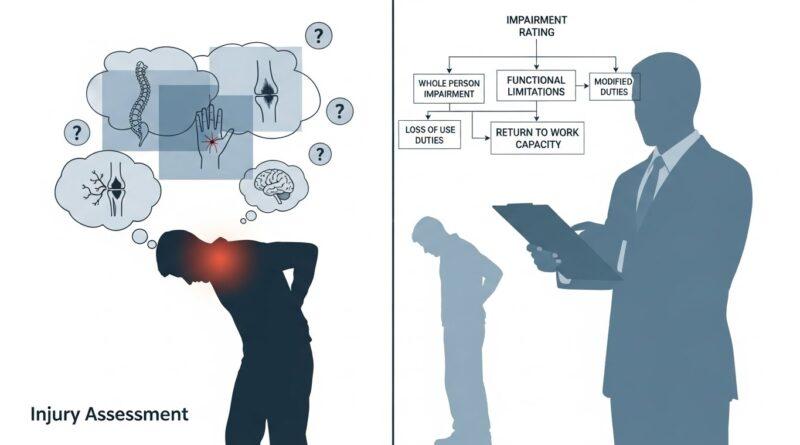
How Permanent Disability Is Classified After Work Injuries
An employee walks out of their doctor’s office clutching a stack of paperwork and nursing a slipped disc that’s keeping them up at night. Unfortunately, they didn’t get good news, the doctor says healing is complete, and they’re going to have to deal with the pain for the rest of their life.
It’s in this moment that the employee gets labelled and their career needs to adapt to the change. There are two forms of permanent disability under workers’ compensation; Permanent partial disability, and permanent total disability, with each classification describing how the employee’s injury affects their workplace functionality and ability to earn a living.
While the classifications are a mere formality, the reality of the situation shows up every time the employee bends down to tie their boots, hold a jackhammer steady, or climbs into their truck on site.
The Tragic Pathway to Permanent Disability
It takes months of treatment and physical therapy before the employee receives permanent disability status. There will come a time when the doctor attending to them realizes that the patient has healed all they can, and they won’t improve much beyond this point.
Their ROM in affected joints might stabilize, their pain starts to subside, and their strength reaches its optimal level. This stage of healing and diagnosis is called “maximum medical improvement,” and doctors will shift from treatment to evaluation when they feel the patient is at the MMI threshold.
The doctor assesses their current state and documents physiological limitations relating to their workplace activities. Questions turn toward understanding long-term capacity over boosting short-term healing and their injury/condition progresses from temporary to lasting.
Understanding Permanent Partial Disabilities
A permanent partial disability occurs when the employee retains functional ability after recovering, but the injury carries lasting limitations. For instance, their back may be no longer able to carry heavy loads or pick things up off the workshop floor.
Injuries often follow surgeries that heal the biological structures but leave the patient with reduced joint ROM or weakness in limbs. The result is an employee who can’t return to the full requirements of their job description.
Doctors will assign the patient with impairment ratings based on a measurable loss of physical prowess, presenting their rating as a percentage. Any benefits the patient/employee receives stem from this rating and their payments occur over a defined period tied to the injured body part or overall impairment level. They might receive a weekly check or a lump sum after reaching a formal agreement with their employer.
Permanent partial disability rarely removes the employee from the workplace entirely, but it does affect how they do work, and employees must adapt their workplace routine to suit their new physiological capabilities.
The Life-Changing Aspects of Permanent Total Disability
If the employees’ body can’t handle the mental or physical demands of their old job, then a permanent total disability applies.
Severe spinal injuries, traumatic brain injuries, and advanced lung disease are some examples of workplace injuries and sometimes combine into conditions where the employee can no longer work at all.
An evaluator will look at the employees sitting and standing endurance, their concentration, and dexterity. If these factors are now outside of what’s considered a workable limit, then it’s classified as a permanent total disability.
Benefit payments are set up for long-term assistance, reflecting a percentage of the employee’s prior wages, subject to legal caps.
How Doctors and Evaluators Reach Medical Decisions on Disability
Medical doctors allocate disability classifications, basing their decision on their findings during physical examination. The physician documents everything they find, including nerve response, inflammation, and muscular or skeletal damage.
Functional capacity evaluations observe how the employee performs tasks like lifting and carrying under their diminished physical status. After the medical doctor finishes their examination the patient undergoes vocational guidance, reviewing their work history, education, and skill set, comparing their abilities to jobs available to them in the labor market.
Each step of the process creates a paper trail, connecting the employees’ physical limitations to their employment options.
A Daily Experience with a Permanent Partial Disability
You’ll notice your permanent partial disability usually flares up during routine tasks in the workplace, and at home. You’ll feel your back strain as you load the groceries into the car and it feels tighter on those cold winter mornings when you get out of bed.
You might need assistance from a joint support like a back brace, and painkillers to manage the fallout. Some days might feel manageable, and on others you might need to err to the side of caution with your movements.
A Daily Experience with a Permanent Total Disability
Experiencing a permanent total disability changes your life, reshaping your schedule around your energy levels. You’re planning your work week around visits to the doctor and physical therapist, and you find that you need more rest during the day.
Your injury influences the decisions you make, and you’ll need a good support system to keep your head together when the challenging times arrive. Eventually you’ll build a new rhythm in life that helps you move forward, but it takes time to adapt to these changes and integrate them into your life.
Misunderstandings with Medical Disability Classifications
It’s easy to misinterpret “permanent disability” as “total inability,” but the employee may still be able to return to work. However, they may have certain physical restrictions preventing them from doing all the aspects of their o0ld job.
Assuming that permanent total disability requires a dramatic visible injury is incorrect. The underlying cumulative damage or internal physiological conditions qualify for the rating if function disappears.
The Hard Choices Facing Workers after Disability Classification
After receiving a medical classification on their injury status an employee faces a string of tough decisions. They’ll need to return to duty with modified expectations, explore the advantages of vocational retraining, and manage their long-term medical needs while reviewing their settlement options.
Each choice the employee makes affects their earning potential, income, daily work routine, and their health. Get the guidance you need to make the most out of a bad situation and call Fendon Law for assistance today.