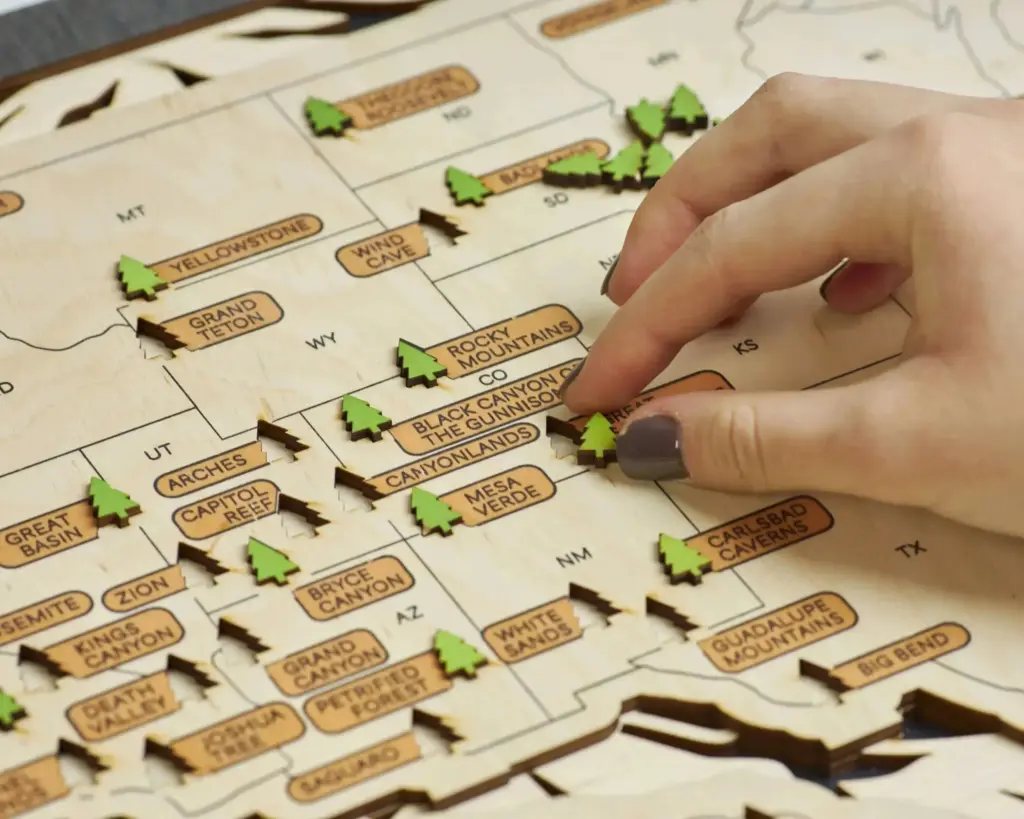
How Wooden Maps Help You Visualize Your National Park Adventures
Exploring national parks is more than moving from one trail to another — it is a process of learning, observing, and building a deeper connection with the landscapes around you. While digital tools can record routes and photos, they rarely provide the tactile, structured way of understanding a place that a physical object can. Wooden maps offer a unique form of visualization that turns your adventures into something you can see, touch, and analyze long after the trip ends.
How Wooden Maps Enhance Understanding Through Structure and Visual Depth
Wooden maps are crafted from layered wood, allowing them to represent topography, elevation, and natural boundaries in a way flat paper or screens cannot. This layered design naturally encourages the mind to think more spatially: hikers can better understand the relationship between valleys and peaks, the scale of a canyon, or the layout of a lake system.
Such maps support a more analytical approach to adventure. They help travelers structure their understanding of the environment by offering:
- Clear hierarchical visualization — natural features appear in distinct layers, making complex landscapes easier to interpret.
- Improved spatial reasoning — seeing elevation in real depth enhances navigation skills and strengthens memory of terrain.
- Long-term learning — wooden maps act as reference tools for understanding geology, ecosystems, and park geography over time.
They aren’t just beautiful objects — they’re functional models that develop your ability to “read” the land more effectively.
Planning and Reflecting with Wooden national park maps
Wooden national park maps serve as powerful tools for both preparation and reflection. Their accuracy and three-dimensional texture help travelers structure their trips with greater clarity.
For Planning
- Route visualization becomes intuitive. You can immediately see which areas are rugged, which are accessible, and how different landmarks connect.
- Better decision-making. When elevation and terrain are visible, it becomes easier to plan realistic daily distances and identify potential challenges.
- Goal setting and motivation. A map displayed at home encourages you to chart future destinations and track progress across multiple parks.
For Reflection
- A cognitive map of memories. Looking at a wooden map after returning from a trip helps reinforce spatial memory and strengthens your understanding of the places you visited.
- Structuring personal achievements. Travelers often mark completed trails, peaks, or campsites, turning abstract memories into a clear, visual timeline.
- Building narrative continuity. Every new trip adds another layer to your “adventure history,” which becomes easier to follow when visually mapped.
In this sense, wooden maps transform your experiences into a structured, evolving story of exploration.
Wooden Maps as Tools for Personal Growth and Outdoor Awareness
Interacting with physical maps encourages slower, more mindful engagement with geography. Unlike digital apps that zoom and scroll instantly, wooden maps require attention — you study contours, compare areas, and trace paths with your fingers.
This tactile process naturally enhances:
- Observation skills — you learn to recognize how geological formations influence trails and viewpoints.
- Environmental awareness — the physical presence of natural features on the map fosters respect for protected landscapes.
- Strategic thinking — planning with a static, detailed map strengthens your ability to anticipate conditions and visualize outcomes before they happen.
For many adventurers, wooden maps become part of their long-term relationship with nature — a reminder that understanding the land is a continuous practice.
A Lasting Way to Chronicle Your Adventures
Ultimately, wooden maps offer a unique blend of artistry, geography, and personal storytelling. They help organize experiences, support deeper learning, and turn national park journeys into something that can be revisited every day.