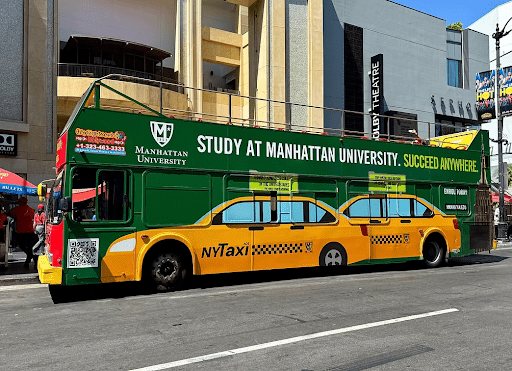
Top Ways Transit and Subway Advertising Are Shaping North American Cities
Transit advertising in North American urban cities is one of the most visible and reliable advertising channels. It is effective because it is visible, memorable, and most importantly captures the attention of the target audience, busy commuters. Subway advertisements in particular are the most powerful because, out of all of the advertising available in public transportation, they are essentially the most important part of the public transportation advertising “ecosystem.”
The advertising potential of subways is ever-increasing, and so it’s no wonder the advertising ecosystem in busy subways is constantly expanding. A busy subway is always digitall is always an over-crowded and busy subway. Because of the stress of over-crowding and lost time, digital advertisements lose to the “not lost in the digital clutter” advertising of traditional posters or advertising printed advertising on the hinged doors of a subway train.
Why Urban Transit Advertising Is Still Effective
Transit advertising captivates audiences because it is part of the mundane flow of city life. People use public transits every day and even take them to do their daily life tasks like going to grocery stores and going to work. In each leg of the journey and in each moment they spend waiting, walking, and lining up, people encounter advertising messages in a public space, get influenced by those ads and have no opportunity to skip them or do something else.
Commuters spend, on average, 72 minutes a day on the ads into and out of their city.
-
Captive Audience.
Transit ads are there for the duration of the public commute.
- Daily Foot Traffic.
Transit systems have more digital and traditional advertising access to commuters than others.
- Broad Audience.
Transit advertising is part of the daily lives of everyone:
Office Workers
Students
Tourists
Shoppers
Local Residents
Diverse Walkers
- Cost-Effective Outreach
When examining the cost of visibility through other forms of advertising (TV, online videos, some outdoor digital advertising), expenses of transit advertising acts as an affordable advertising way. This cost-effective advertising visibility works for larger national companies, as well as smaller local businesses.
- Repeated Messaging Increases Recall
Everyday commuters, seeing the same advertising on a train wall, in a subway, or at a train platform, brand recall messaging retention.
The Unique Advantage of Subway Ads
Out of all forms of transit advertising, subway ads take the cake. They are a workplace-staple in major transportation cities (NY, Boston, Chicago, Philly, Washington) where millions of commuters rely on the underground trains, making subway advertising extraordinarily effective.
What makes subway advertising so effective?
- Longer Dwell Times
When waiting for a train, commuters are often left standing for a few minutes. In some cases, it becomes a captive audience, focusing on the advertising posters Subway Ads are ideal for brands aiming to make a splash by promoting a new product, event, or presence. Using eye-catching advertising posters, these ads provide reach, scale, and impact immediately, digital screens, and interiors of the subway trains!
- Total Immersion
Passively carrying an audience until the next station, subway advertising is uniquely placed and designed to tell a brand’s story. Subway advertising uses every surface available in a subway station as advertising space!
- Creative Flexibility
Subway Advertising is flexible in design format and presentation.
Some examples include:
– Standard Posters
– Wrapped Cars
– Trackside Motion Displays
– Digital Screens
– Large Wallscapes
– Station Dominations
– Interior Cards
– Motion Displays
The design flexibility allows brands to express bold imagery, humor, and storytelling, or even opt for a minimalist design.
- Excellent for Awareness Campaigns
Subway Ads are ideal for brands aiming to make a splash by promoting a new product, event, or presence. These ads provide reach, scale, and impact immediately.
- Reaches Commuters at Key Moments
There are specific rush hours when people are more encumbered and focused. This is when people are reflective and more likely to retain information. Ads for streaming services, financial brands, university programs, or local stores make for ideal timing.
How Transit Advertising Complements Digital Marketing
Offline initiatives like advertising in transit bring balance to a strategy focused mostly on digital tools. It makes brands relatable, trustworthy, and a part of the community. When advertising in transit is combined with digital, online search results, and brand engagement is greatly enhanced.
A commuter might see a subway ad for a mobile application and later search the application on their phone.
A wrapped train could stimulate enough curiosity for a user to explore the brand on social media.
Visitors may be motivated by station takeovers to take immediate actions through a prompt to scan a QR code.
Because of this integration of offline ads on transit systems and online consumer behaviors, many advertisers consider transit ads on the subway to be a necessity.
Just as Big Brands, Local Companies Reap the Benefits
Transit systems are not solely for national advertisers. Businesses in the area, such as restaurants, clinics, delivery services, fitness centers, real-estate, universities, and community services also gain from advertising in transit systems.
A single subway ad can concentrate on a specific subsection of the advertising market.
* A specific neighborhood
* A specific commuter line
* A specific demographic
* A specific area with a high concentration of affluent consumers
This form of advertising on subways offers a degree of personalized targeting to advertisers, a level of which is hard to find with other media, and is one of the many reasons why this form of advertising is so popular.
Why Subway Ads Still Matter in 2025 and Beyond
The value of subway advertising continues to be high, even with the availability of online streaming services, the expansion of social platforms, and the availability of ads on digital devices. The reason is simple: cities continue to rely on public transit. People continue to commute, and in underground transit systems, where ads are the only distraction people have, they are able to concentrate on the ads.
The message, the audience, and the ad design are the only things to consider, which is why subway advertising is so boldly memorable and engaging. Concluding Remarks
Transit advertising still exists because of how \\”urban\\” it is. It is able to engage with consumers in their natural environment, and it uses their surroundings to communicate messages. Most effective and iconic, subway advertising is still a big part of this environment.
Among advertising mediums, subway advertising is unparalleled in providing brands with the opportunity to stay relevant, front of mind, and top of consciousness in the busiest and most contended cities of the country. Transit advertising works for every business and the subway is a big spotlight.