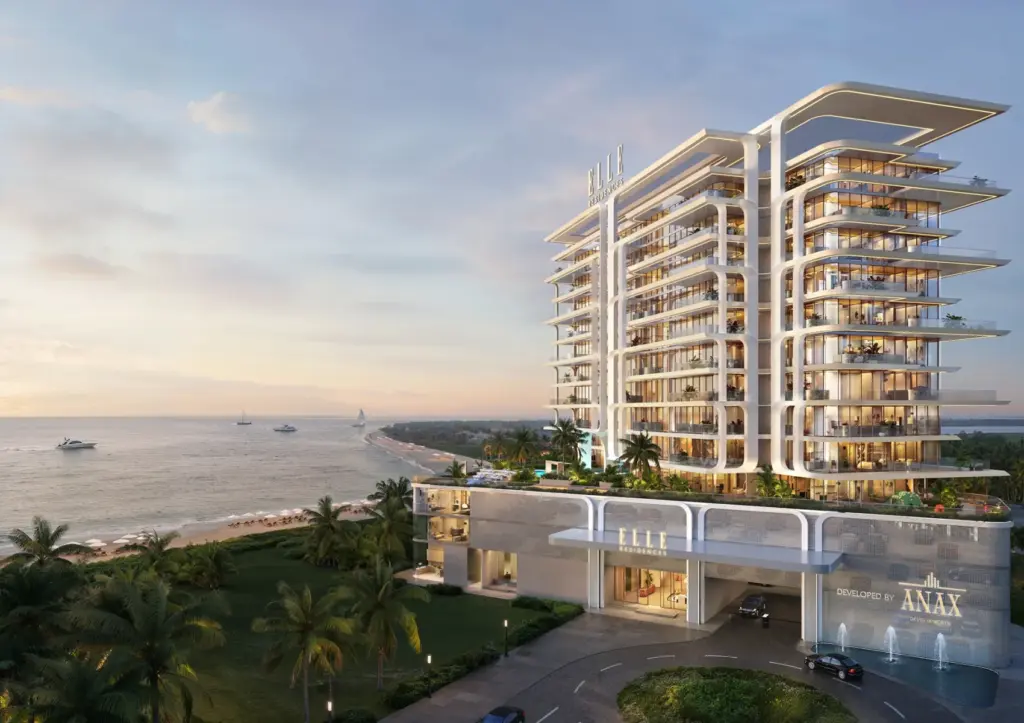
Dubai Islands: The New Frontier of Luxury Coastal Living
Along the northern edge of Dubai, a new coastal district Dubai Islands is emerging as one of the most visually ambitious urban landscapes in the region. It is a reminder of how quickly public imagination adapts to new destinations even before they fully take shape. What distinguishes Dubai Island is not its size or its engineering complexity, but the way it reframes the city’s relationship with light, space, and the sea. Rather than extending Dubai upward, the islands extend it outward, creating a horizon-driven aesthetic that marks a new phase in the city’s evolution.
Across the shoreline, early residential and hospitality projects such as Elle Residences, Ellington Cove, Azizi Wasel, Bay Villas by Nakheel and other projects are beginning to shape the architectural rhythm of the district. Each introduces a distinct interpretation of waterfront living, but all share a commitment to openness, texture, and the calm that defines the islands’ design language. Collectively, these projects form the first notes of a larger composition, suggesting a future in which Dubai Islands becomes not only a place to live or visit, but a lifestyle statement expressed through architecture and atmosphere rather than scale alone.
A New Coastal Identity
Dubai’s global identity has long been shaped by its skyline—a vertical narrative of ambition visible from land, sea, and air. Dubai Islands introduces a different kind of storytelling. Its identity unfolds horizontally, across low-rise silhouettes and long coastal promenades where architecture is not meant to dominate the landscape but to extend it. The district embraces the inherent drama of water and sky, using minimalism rather than monumentality to define its visual character.
This shift toward a more grounded coastal identity speaks to changing expectations in luxury travel and global residential living. Increasingly, the allure of a place is measured not by its density or its height, but by the experience it offers: the softness of its light, the accessibility of its public spaces, and the way architecture interacts with its surroundings. Dubai Islands embodies this new urban emotion, offering visitors and residents an environment where the pace slows and the horizon becomes an active element of design.
Architecture Framed by the Horizon
Architecture on Dubai Islands follows a clear visual philosophy: space is as meaningful as structure. Buildings are shaped to preserve sightlines, enhance natural ventilation, and allow sunlight to move gently across façades. The interplay of shadows and reflections is intentional, forming a dialogue between the built environment and the shimmer of the Gulf.
Stone, glass, and neutral-toned materials amplify the natural palette of the coastline. Interiors extend outward into terraces and shaded walkways, reinforcing the idea that the boundary between indoor and outdoor space should feel porous. This approach creates a sense of continuity that defines the district’s identity—a calm, considered atmosphere where simplicity becomes a luxury in itself.
The Luxury of Light and Climate
Light is central to the Dubai Islands aesthetic. Morning brings a diffused glow that softens architectural edges, while late afternoon creates long shadows that move slowly across boardwalks and plazas. Evening transforms the district into a landscape of warm reflections, with façades catching the last light before the sea absorbs the horizon into darkness.
The climate plays a shaping role as well. Shading systems, garden-lined promenades, and layered public spaces create microclimates that remain comfortable throughout much of the year. Here, luxury is not defined by excess but by the thoughtful engineering of comfort—an increasingly important priority for global travelers who seek destinations that balance design with environmental awareness.
A Global Magnet for Design and Travel
Dubai Islands is poised to become a destination where global travelers, designers, and creative professionals intersect. The district’s architectural language—clean lines, controlled proportions, and a refined palette—resonates with an international audience that values design-led environments. For New Yorkers in particular, the islands offer a kind of coastal counterpart to the city’s architectural intensity: open, bright, and shaped by nature.
As Dubai continues to attract visitors who blend work, travel, and creative exploration, Dubai Islands will likely play a significant role in that experience. The area’s cultural programming, hospitality initiatives, and emerging retail landscape are designed to reflect a global sensibility rooted in place rather than in uniform luxury formulas.
A New Chapter in Coastal Living
Dubai Islands is still taking shape, but its direction is clear. It represents a reimagining of luxury rooted not in height or opulence but in atmosphere, design intelligence, and a renewed relationship with water. The district signals a future in which coastal living is defined by calm, space, and the seamless blending of architecture with environment.
For travelers and residents alike, the islands offer a vision of luxury that is both contemporary and timeless—a reminder that some of the most powerful urban experiences emerge not from architectural dominance but from the thoughtful framing of light, land, and sea.